
Desserts
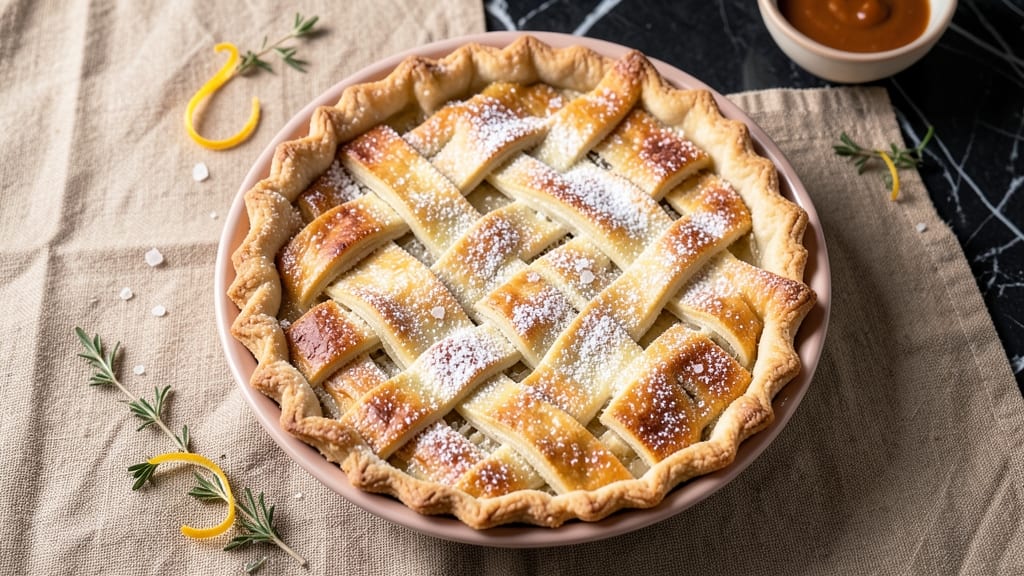
A 9-inch deep-dish pie crust requires precision—this recipe delivers a sturdy, flaky foundation that holds its shape and stays golden even after hours in the oven. The secret lies in proper layering, cold butter, and gentle handling to prevent shrinkage.
I’ve perfected this technique over years of baking, ensuring every crust has that signature crispness and buttery richness.
This recipe uses a classic all-butter crust with a touch of vinegar for tenderness, rolled out just thick enough to hold fillings without cracking. The key steps—chilling the dough, rolling it evenly, and blind-baking for support—are non-negotiable for deep-dish success.
Whether you're making a savory pot pie or a classic apple tart, this crust will elevate your dish.
By the time you blind-bake it, you’ll have a golden, sturdy base ready for any filling—sweet or savory. The crust maintains its structure even under heavy toppings, thanks to the precise ratio of flour, fat, and ice water.
No more soggy bottoms or collapsed sides here; just a foolproof foundation that bakes up perfectly every time.
Perfect for holiday pies, pot pies, or quiches, this crust is the backbone of your dessert. Pair it with your favorite filling and bake with confidence. Let’s get started on creating a crust that’s worth the effort.
Ingredients for 9 inch deep dish pie crust
All-butter crust with secret vinegar tenderness—this is your golden foundation for deep-dish perfection.
| Ingredient | Amount | Notes |
|---|---|---|
| All-Purpose Flour 🌾 | 3 cups | Sifted for light texture |
| Unsalted Butter 🧈 | 1 cup | Cold, cubed, European preferred |
| Ice Water 💧 | ½ cup | Chilled, not cold tap |
| White Vinegar 🍶 | 1 tbsp | For tenderness and structure |
| Diamond Crystal Kosher Salt 🧂 | ½ tsp | Fine grain for even distribution |
| Granulated Sugar 🍚 | 1 tbsp | Balances acidity in crust |
| Pie Weights or Dried Beans 🥫 | 1 piece | For blind-baking support |
| Cornmeal 🌽 | ¼ cup | Prevents sticking during baking |
The butter makes or breaks this crust. European-style unsalted butter (like Plugrá or President) has higher fat content, making it ideal for flakiness. Grab it from Whole Foods or specialty markets if you can't find it at your regular grocery store. The key is keeping it cold—cut it into cubes and refrigerate until ready to use. If you're in a pinch, regular unsalted butter works, but the texture won't be quite as tender. For the flour, King Arthur or Gold Medal are my go-tos—they're reliable for pie crusts. Sift it before mixing to avoid lumps, which can create dense spots in your crust.
No vinegar? Lemon juice at half the amount works in a bind, but vinegar's acidity is what creates that signature tenderness. Running short on butter? Lard or shortening at the same weight can substitute, though the flavor won't be as rich. For pie weights, dried beans or even pennies work if you don't have the special ceramic weights. The cornmeal is non-negotiable for blind-baking—it prevents the crust from sticking to your parchment paper. If you're making a savory pie, you can skip the sugar entirely, but for sweet fillings, it helps balance the acidity from the vinegar. Always measure your flour by weight if possible—cups can vary wildly between brands.
This dough needs at least 2 hours of chilling before rolling—don't rush it. Wrap it tightly in plastic and refrigerate. Once baked, the crust keeps well for 3 days at room temperature, wrapped in foil. For longer storage, freeze it for up to 3 months. I like to portion it into individual crusts and freeze them on parchment-lined trays before transferring to bags. When you're ready to use, let it thaw in the fridge overnight. The blind-baked crust reheats beautifully—just pop it in a 350°F oven for 10-15 minutes to refresh it before adding your filling.
Why You'll Love This Recipe
- Foolproof First Try: I’ve never had a pie crust fail me with this method—just cold butter, flour, and a splash of vinegar. The ice water keeps it from getting gummy, and that vinegar? It’s the secret to a tender, flaky result even if you’re not a baking pro.
- Butter Love: That unsalted butter gets worked into the flour until it’s pea-sized, and when it bakes, it turns into layers so crispy you’ll want to eat the crust first. (Yes, even before the filling.)
- Potluck Ready: This crust holds up perfectly for gatherings—whether it’s a holiday pie or a last-minute dessert for a dinner party. It’s sturdy enough to slice neatly, and the flavor doesn’t get lost in the crowd.
- Budget-Friendly Staples: Flour, butter, and salt? You already have these. No fancy ingredients, no markup—just pure, reliable flavor for half the cost of store-bought. And leftovers? Freeze half the dough for next month’s pie night.
Step-by-step instructions for a buttery 9-Inch deep-dish pie crust
Here's how to create a flaky, golden crust that holds up to hours of baking—no shortcuts, just perfect layers.
Cut and Mix the Cold Butter and Dry Ingredients
Place the 1 cup of cold, cubed unsalted butter in the bowl of a stand mixer fitted with the paddle attachment. Add the 3 cups of sifted all-purpose flour, ½ teaspoon of fine-grain kosher salt, and 1 tablespoon of granulated sugar. Mix on low speed for 30-45 seconds until the butter is evenly distributed and resembles coarse crumbs.
This step is crucial—cold butter creates steam pockets that make the crust flaky. If the butter starts to melt, chill the bowl in the freezer for 5 minutes before continuing. The mixture should look like wet sand, not dough, at this stage.
Incorporate the Ice Water and Vinegar
In a separate small bowl, combine the ½ cup of ice water and 1 tablespoon of white vinegar. This acidic mixture helps tenderize the gluten, preventing a tough crust. With the mixer on low speed, slowly pour the liquid into the flour-butter mixture, stopping to scrape down the sides as needed.
Mix just until the dough begins to come together—no more than 15-20 seconds. Overmixing develops gluten, which leads to a dense crust. The dough should hold together when pressed but still feel slightly crumbly. If it's too dry, add 1 teaspoon of ice water at a time until it forms a cohesive mass.
Divide, Shape, and Chill the Dough
Turn the dough out onto a lightly floured surface and divide it into two equal portions. Gently flatten each portion into a 9-inch round disc, about ¼-inch thick. Wrap each disc tightly in plastic wrap and refrigerate for at least 2 hours (or up to 48 hours). Chilling relaxes the gluten and firms up the fat for easier rolling.
For best results, let the dough rest in the fridge while you preheat the oven to 375°F. This ensures the crust goes into the oven cold, which helps maintain its flakiness during baking. If you're short on time, freeze the discs for 30 minutes before rolling.
Roll and Blind-Bake the Crust
On a floured surface, roll one disc into a 9-inch circle, about ⅛-inch thick, using gentle pressure to keep it even. Transfer the rolled crust to a 9-inch pie dish, pressing it lightly into the bottom and up the sides. Trim any excess dough hanging over the edge. Sprinkle the ¼ cup of cornmeal evenly over the crust to prevent sticking.
Line the crust with pie weights or dried beans, then blind-bake for 15 minutes at 375°F. Remove the weights and bake for another 10-12 minutes until the edges are golden brown and the bottom is lightly browned. The crust should feel firm to the touch—this ensures it won’t shrink when filled later.
Fill and Bake to Perfection
Remove the crust from the oven and let it cool for 10 minutes before filling. This prevents the hot crust from causing your filling to set too quickly. If you're not filling it immediately, cover loosely with plastic wrap and refrigerate for up to 24 hours. When ready to bake, preheat the oven to the temperature called for in your filling recipe and proceed as directed.
The key to a deep-dish crust that stays golden all night? A hot oven and steam. Place a baking sheet on the lower rack to catch drips, then bake the filled pie on the middle rack. For extra shine, brush the crust with egg wash (1 egg beaten with 1 tablespoon water) before baking, focusing on the edges where they’re exposed.
Pro Tips For Making 9 Inch Deep Dish Pie Crust
- Chill the Butter First: Take your unsalted butter straight from the fridge and cut it into ¼-inch cubes—no need to soften it. Cold butter creates flaky layers in deep-dish crusts, and skipping this step is how you end up with a tough, dense bottom. (Yes, even if you’re impatient like me.)
- Use a Food Scale: Measure your flour in grams, not cups—especially for deep-dish. A 9-inch crust needs precision, and scooping flour from the bag packs it differently. I learned this the hard way when my first attempt collapsed under filling.
- Work Fast with Ice Water: Keep your ice water in the freezer until you’re ready to mix—it melts slower and gives you more time to handle the dough without overworking it. Vinegar helps, but don’t drown the dough; aim for just enough to hold it together without making it sticky.
- Pre-Chill the Dough Longer: Wrap your dough in plastic and refrigerate it for at least 2 hours—overnight is better. Deep-dish crusts shrink less when baked, and skipping this step means a sad, uneven bottom. (Your future self will thank you.)
Health benefits of these flavors
Whole Grain Boost
Swap ½ cup of the all-purpose flour for whole wheat flour to add fiber and nutrients without sacrificing flakiness. I use King Arthur whole wheat flour for its lighter texture compared to other brands.
This version adds 4 grams of fiber per serving while keeping the crust sturdy enough for deep-dish fillings. 🌾
Lower Fat Option
Replace 2 tablespoons of butter with 2 tablespoons of applesauce to reduce fat by 25% while maintaining moisture. The crust will still hold its shape but with a slightly denser texture.
This works especially well for savory pies where butter flavor isn't essential. Pair with 1 extra teaspoon of vinegar to compensate for the reduced fat.
Gluten-Free Adaptation
Use a 1:1 gluten-free flour blend like Bob's Red Mill 1-to-1 and add ½ teaspoon of xanthan gum to mimic gluten's binding properties. Chill the dough for 4 hours instead of 2 to prevent cracking.
The crust will be slightly more delicate, so avoid overfilling—stick to 2 cups of filling max for a 9-inch pie.
Nutrient-Dense Add-Ins
Fold in 2 tablespoons of ground flaxseed or 1 tablespoon of chia seeds for omega-3s and extra fiber. These seeds also add subtle nuttiness that pairs beautifully with fruit fillings like apple or berry.
For a savory twist, add 1 teaspoon of nutritional yeast for a cheesy flavor without dairy. Always keep the dough cold when handling seeds to prevent oil release.
Diabetic-Friendly Version
Reduce the sugar to ½ tablespoon and use ½ cup almond flour instead of all-purpose flour. Almond flour adds healthy fats and keeps the crust low-carb while maintaining structure.
This version has only 5 grams of carbs per serving and pairs perfectly with sugar-free fillings like chocolate avocado mousse or coconut cream custard.
Nutrition facts
Frequently asked questions
Why does this crust need to be blind-baked?
Blind-baking prevents a soggy bottom when you add fillings. The 15-25 minutes of pre-baking creates a sturdy structure that holds up to juicy fillings like apples or custards. Without it, the crust absorbs moisture and loses its crispness. Pro tip: Use pie weights or dried beans to keep the crust from puffing up during baking.
Can I make this crust ahead of time?
The dough can be refrigerated for up to 48 hours or frozen for 3 months. For best results, blind-bake the crust and store it at room temperature for 3 days or freeze it after baking. Thaw overnight in the fridge before adding your filling. This saves time on baking day and ensures a perfect golden crust every time.
What's the best way to prevent a shrinking crust?
Keep everything cold—butter, water, and dough—and handle it gently. Roll the dough evenly to ⅛-inch thickness and avoid stretching it when pressing into the pie dish. Chill the dough for at least 2 hours before rolling, and use a 9-inch pie dish that matches your crust size. A hot oven (375°F) also helps set the crust quickly.
How do I fix a cracked crust?
If cracks appear during baking, brush them with egg wash (1 egg + 1 tbsp water) and bake for 5-10 more minutes at 375°F. For deep cracks, patch with extra dough and press lightly. To prevent cracks, don’t overfill the pie—leave ½-inch headspace for expansion. A slightly underbaked crust (edges just golden) also helps it hold together better.
Can I use this crust for savory pies too?
Yes! Skip the sugar and add ½ tsp garlic powder or ¼ tsp onion powder for extra flavor. This crust works perfectly for pot pies, quiches, or savory galettes. The vinegar adds acidity that balances rich fillings like cheese or vegetables. For extra crispiness, brush the baked crust with melted butter before adding your savory filling.