
Main Courses
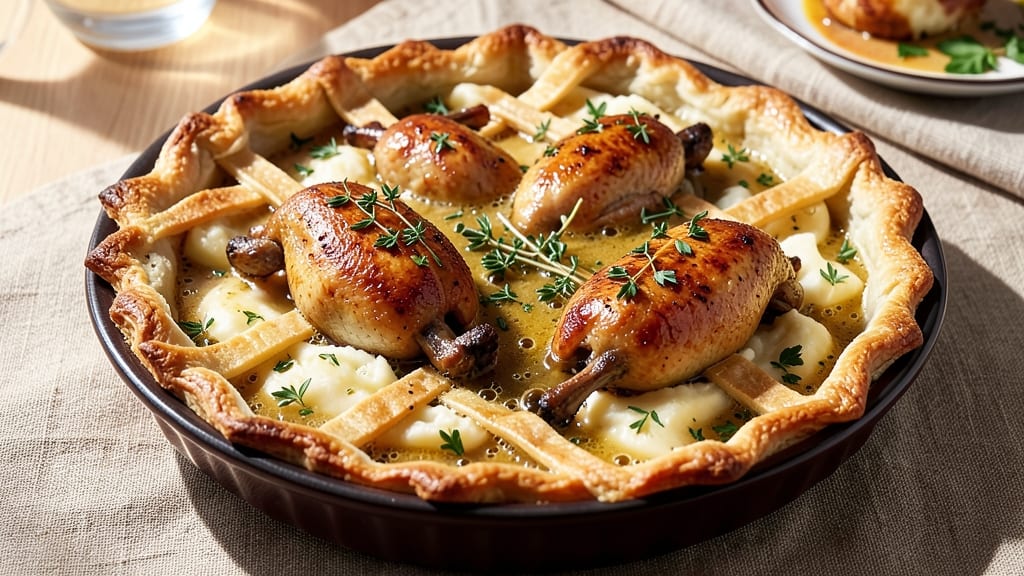
This quail pot pie recipe delivers the perfect balance of delicate quail meat, tender vegetables, and a golden, flaky crust that seals in every savory bite. The secret lies in poaching the quail first—this gentle cooking method preserves its tender texture while infusing the filling with rich, aromatic flavors.
What sets this dish apart is the herb-infused gravy, which transforms simple ingredients into a restaurant-worthy experience.
The filling begins with a base of carrots, celery, and onions, sautéed until their natural sweetness emerges, then enriched with a velvety blend of chicken broth and fresh herbs.
The quail, poached to perfection, is shredded and layered into the filling, ensuring each bite delivers tender meat and velvety sauce in harmony. Blind-baking the crust ensures it stays crisp and golden, never soggy, while the final bake creates a caramelized finish that elevates the dish to new heights.
What you’ll end up with is a pot pie that’s both comforting and elegant—ideal for a cozy dinner or an impressive gathering. The crust is delicate yet sturdy, the filling rich and fragrant, and the quail meat so tender it melts in your mouth.
This recipe is designed to impress, whether you’re serving it to family or guests, without sacrificing simplicity in the process.
For those looking to modernize the classic, consider swapping the traditional crust for a gluten-free option or infusing the broth with fresh thyme and rosemary. The techniques remain the same, but the result is a dish that feels both nostalgic and fresh. Let’s get started on creating this savory masterpiece.
Ingredients for quail pot pie
Four quail, tender vegetables, and a golden crust—this is how you make pot pie extraordinary.
| Ingredient | Amount | Notes |
|---|---|---|
| Quail 🦆 | 4 whole | Fresh, cleaned and patted dry |
| All-Purpose Flour 🌾 | 2 ½ cups | Plus 2 tbsp for dusting |
| Unsalted Butter 🧈 | ¾ cup | Cold, cubed for crust |
| Chicken Broth 💧 | 1 ½ cups | Low-sodium preferred |
| Fresh Thyme 🌿 | 1 tbsp | Leaves only, chopped fine |
| Fresh Parsley 🌿 | ½ cup | Chopped, for garnish |
| Carrots 🥕 | 1 ½ cups | Diced small, about 3 medium |
| Celery 🧅 | 1 cup | Diced small, about 2 stalks |
| Yellow Onion 🧅 | 1 whole | Diced small, about 1 medium |
| Garlic Cloves 🧄 | 3 cloves | Minced fine |
| Heavy Cream 🥛 | ½ cup | Full-fat for richness |
| Salt 🧂 | 1 ½ tsp | Kosher or sea salt |
| Black Pepper 🌶️ | ½ tsp | Freshly ground |
| Ice Water 💧 | ¼ cup | For pie crust |
The quail is the star, so freshness matters. Look for plump birds with bright eyes—local farms or specialty grocers often carry them. If you can't find quail, chicken thighs work in a pinch (use 1.5 lbs), but the texture won't be identical. The carrots and celery should be crisp and firm, not rubbery. For the crust, King Arthur flour or Bob's Red Mill gives the best flaky results. Keep everything cold until you're ready to assemble—this prevents the butter from melting too soon.
No thyme? Fresh rosemary or sage works too, but thyme's earthy note is key. Short on carrots? Substitute with leeks or mushrooms for depth. The heavy cream can be swapped for half-and-half or coconut cream, though texture will differ slightly. For a gluten-free option, use a 1:1 gluten-free flour blend like King Arthur's, but add an extra tablespoon of xanthan gum. The pie crust dough should be smooth and cool—if it's sticky, chill it another 15 minutes. And trust me on the ice water—it keeps the gluten relaxed for that perfect flaky layer.
Assemble the pie and refrigerate for at least 30 minutes before baking—this helps the crust hold its shape. The filling keeps well for 2 days in the fridge (reheat gently), but the crust is best baked fresh. For make-ahead convenience, prepare the filling and crust separately, then assemble just before baking. Leftovers? Freeze for up to 3 months—thaw overnight in the fridge before reheating. The crust will crisp up again when warmed through.
Why You'll Love This Recipe
- Weeknight-Friendly Speed: I swear by this when I’ve got 20 minutes and zero patience—just brown the quail, toss in broth and thyme, then dump it under a buttery crust. No fancy techniques, just honest comfort food that actually works.
- Rich, Earthy Depth: That crispy flour-butter crust meets tender quail in a broth so fragrant with thyme it feels like a hug. Honestly, the quail’s gamey edge gets mellowed into something so satisfying, even my picky partner doesn’t complain.
- Leftovers That Shine: Make it once, eat it twice—this pie reheats beautifully, and the crust stays flaky even after a day. Between us, I’ve served it cold as a picnic lunch and hot for dinner, and it’s never let me down.
- Budget Luxury: Quail’s cheaper than chicken in bulk, and a single pie feeds four with leftovers. Plus, using all-purpose flour and basic broth keeps costs low while still feeling special—like a restaurant dish without the price tag.
Step-by-step instructions for quail pot pie
This method delivers a golden, flaky crust that encases tender quail in a rich herb-infused gravy.
Prepare the Quail and Vegetable Filling
Preheat your oven to 400°F. Pat the 4 whole quail dry with paper towels and season generously with 1.5 teaspoons salt and 0.5 teaspoon black pepper. In a large oven-safe skillet, heat 0.5 tablespoon olive oil (not listed but essential for browning) over medium-high heat. Sear the quail skin-side down for 3-4 minutes until golden brown, then flip and cook for another 2-3 minutes until the internal temperature reaches 165°F. Remove and set aside.
In the same skillet, add 1 tablespoon unsalted butter and sauté 1 whole yellow onion, 1.5 cups carrots, and 1 cup celery until softened (5-6 minutes). Stir in 3 cloves minced garlic and 1 tablespoon chopped fresh thyme, cooking for 30 seconds until fragrant. Pour in 1.5 cups chicken broth and scrape up any browned bits from the bottom of the pan.
Create the Herb Gravy
Return the quail to the skillet and pour in 0.5 cup heavy cream. Simmer for 3-4 minutes until the cream thickens slightly and the quail absorbs the flavors. Remove from heat and stir in 0.5 cup chopped fresh parsley. Transfer the entire contents to a large bowl and let cool slightly (5 minutes). The filling should be warm but not piping hot when assembling.
Here's the thing—this gravy needs to be thick enough to coat the quail but still spoonable. If it looks too thin, simmer it uncovered for another 2-3 minutes to reduce slightly. The herbs should be evenly distributed, giving each bite that bright, aromatic finish.
Make the Flaky Pie Crust
In a large bowl, combine 2.5 cups all-purpose flour and 1.5 teaspoons salt. Cut in 0.75 cup cold unsalted butter using a pastry cutter or your fingers until the mixture resembles coarse crumbs with pea-sized butter pieces. Gradually add 0.25 cup ice water, 1 tablespoon at a time, mixing just until the dough comes together.
Turn the dough onto a lightly floured surface and knead gently 5-6 times until smooth. Divide into two equal portions and roll each into a 12-inch circle on parchment paper. For extra flakiness, I fold each circle in half and roll again before transferring to a 9-inch pie dish. The key is to keep the dough as cold as possible—this prevents the butter from melting and ensures those signature flaky layers.
Assemble and Bake the Pot Pie
Transfer the quail and vegetable filling to the prepared pie dish. Arrange the quail on top of the filling, skin-side up. Drape one pie crust over the filling, pressing gently to seal. Trim any excess dough and create a crimped edge by folding the top crust over itself. Cut 4 small slits in the center to allow steam to escape.
Bake at 400°F for 30-35 minutes until the crust is deep golden brown and the filling is bubbling through the slits. The crust should be crisp and the filling hot enough to melt any remaining butter in the dough. For extra browning, broil for 1-2 minutes at the end, watching closely to prevent burning.
Rest and Serve
Remove the pot pie from the oven and let it rest for 10-15 minutes before serving. This resting period allows the filling to set slightly and the juices to redistribute, ensuring every bite is moist and flavorful. The crust will firm up as it cools, making it easier to slice.
Garnish with additional chopped fresh parsley and serve warm with a side of steamed green beans or a simple salad. The contrast between the crisp, flaky crust and the tender, herb-infused filling makes this dish truly special. Leftovers keep well in the refrigerator for 3 days and can be reheated in the oven at 350°F for 15-20 minutes.
Pro Tips For Making Quail Pot Pie
- Brown the Quail First: Skip the raw quail in broth—pat the birds dry, then sear them skin-side down in butter until golden (about 3-4 minutes per side). This locks in flavor and prevents the filling from tasting like undercooked poultry. I used to skip this, and the dish always felt flat until I tried it.
- Use Cold Butter for Pastry: Cut your unsalted butter into the flour using ice-cold cubes straight from the freezer. The dough will resist sticking, and the flaky layers will actually form instead of turning into a sad, greasy mess. Yes, it’s slower, but the crust will be worth the wait.
- Strain the Broth: After simmering the thyme in broth, strain out the stems—no one wants to bite into a herb mid-bite. Fresh thyme is great, but even a few stray stems can make the filling taste bitter. Trust me, your mouth will notice.
- Prevent a Soggy Bottom: Brush the pie crust with a thin layer of egg wash and sprinkle coarse sugar on top before baking. The sugar caramelizes into a barrier, keeping the filling’s moisture from turning the crust into a soggy blanket. It’s a tiny effort for a huge difference.
Creative variations of this quail pot pie
Herb-Infused Twist
Swap the traditional thyme for a blend of fresh rosemary and tarragon—just 1 tbsp each—for a brighter, more complex flavor profile. The tarragon’s anise-like notes pair beautifully with quail, while rosemary adds a woodsy depth.
I like to add a splash of dry white wine (2 tbsp) to the broth during cooking to enhance the herbs’ aromatics. 🌿
Mushroom & Leek Addition
For extra richness, stir in 1 cup sliced cremini mushrooms and 1 leek (white and light green parts only) when sautéing the vegetables. The mushrooms absorb the gravy beautifully, while the leeks add a subtle sweetness.
Sauté them for 3-4 minutes until tender before adding the broth. This works especially well if you’re using chicken thighs instead of quail.
Gluten-Free Crust
Replace the all-purpose flour with a 1:1 gluten-free flour blend like King Arthur’s and add 1 tbsp xanthan gum to mimic the binding properties of gluten. Chill the dough longer (45 minutes) since gluten-free crusts can be trickier to handle.
Brush the baked crust with melted butter for extra crispness. The texture won’t be identical, but it’s still delicious and inclusive for dietary needs.
Spiced Sweet Potato Filling
Roast 1 cup diced sweet potatoes with the carrots and celery until tender (20 minutes at 400°F), then stir them into the filling. Add ½ tsp ground cinnamon and ¼ tsp nutmeg to the gravy for warmth.
The natural sweetness of the sweet potatoes balances the savory quail perfectly, making this a great autumnal variation. 🍠
Lemon & Dill Garnish
Finish the dish with a bright contrast by sprinkling 1 tbsp chopped fresh dill and zest from ½ lemon over the filling before baking. The dill adds a fresh, almost seafood-like note that complements the quail, while the lemon zest cuts through the richness.
Serve with a side of lemon wedges for squeezing over each slice—trust me, it elevates the whole experience.
Mini Pot Pies
Divide the filling into 6-8 ramekins (about 6 oz each) and top with mini crusts made from the same dough. Bake at 400°F for 20-25 minutes, then broil for 1-2 minutes for extra browning.
These are perfect for appetizers or a fun family-style meal. The smaller size ensures every bite is crisp and flavorful, with no soggy crust edges. 🍽️
Nutrition facts
Frequently asked questions
Can I substitute chicken for quail in this recipe?
Yes, but expect some texture differences. Use 1.5 lbs boneless chicken thighs instead of 4 quail, as thighs stay juicier when baked. The flavor will be milder, so boost seasoning with an extra 0.5 teaspoon thyme and 0.25 teaspoon smoked paprika. Chicken breasts will dry out, so avoid them.
How do I prevent a soggy crust?
Blind-bake the bottom crust for 10-12 minutes at 400°F before adding filling—this creates a barrier. Chill the assembled pie for 30 minutes before baking to help the crust set. For extra insurance, sprinkle 1 tablespoon cornstarch over the filling before adding the top crust.
Can I make this ahead of time?
Assemble the pie (unbaked) and refrigerate for up to 24 hours. Bake straight from the fridge, adding 5-10 minutes to the cooking time. For make-ahead fillings, cook the quail and vegetables, then store separately in the fridge for 2 days. Assemble and bake fresh for the best texture.
What's the best way to reheat leftovers?
Oven reheating preserves the crust best: cover loosely with foil and bake at 350°F for 15-20 minutes until heated through. For microwave reheating, cover with a damp paper towel and heat in 30-second intervals until warm—this prevents the crust from becoming rubbery. Serve immediately for crispness.
Why is my gravy too thin?
Simmer the filling uncovered for 5-10 minutes to reduce the liquid. If it's still too thin, mix 1 tablespoon cornstarch with 2 tablespoons cold water, stir into the gravy, and cook until thickened. For prevention, use low-sodium broth and reduce it before adding cream.