
Desserts
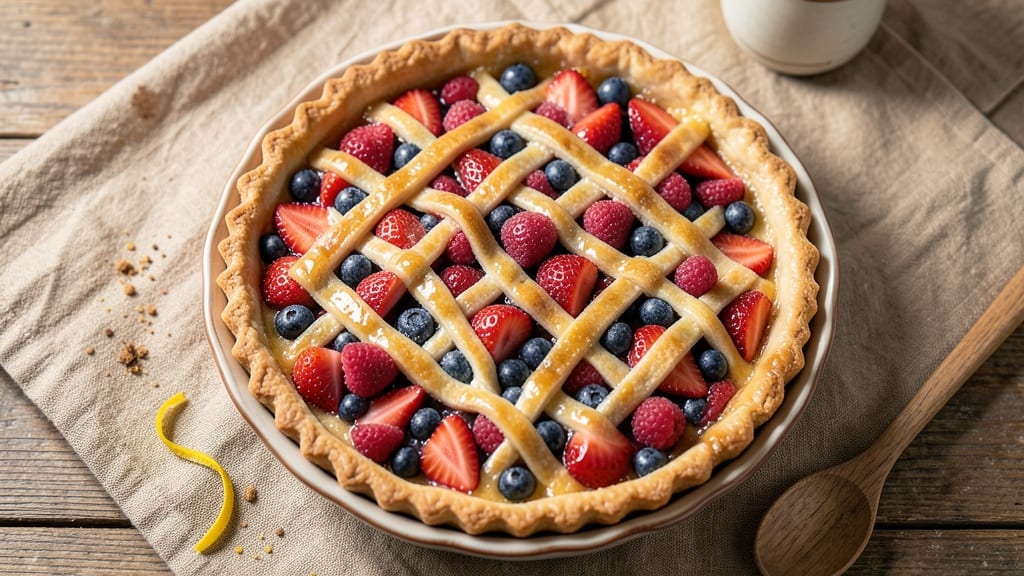
This all-berry pie recipe delivers the perfect balance of sweet-tart flavors in a flaky lattice crust that's both elegant and foolproof. The secret lies in layering mixed berries—strawberries, blueberries, and raspberries—with a touch of cornstarch to keep the filling thick and vibrant.
I’ve perfected this recipe over years of summer baking, ensuring every slice is juicy, not soggy, and topped with that signature crisscross pattern.
The lattice crust is what makes this pie truly special—it adds visual appeal while keeping the berries tender and the filling from overflowing. You can use a homemade crust for that classic buttery flavor or opt for a store-bought shortcut if you're short on time.
The filling’s magic comes from balancing sugar and acidity, so the berries shine without being overpowered. Baking at the right temperature ensures the crust stays crisp while the berries soften just enough to release their juices.
By the time you pull this pie from the oven, you’ll have a golden, fragrant masterpiece with a lattice top that looks like it came from a bakery.
The aroma alone will have everyone gathering around the table, and the first bite—juicy berries bursting with flavor, wrapped in buttery crust—is worth every minute of prep. Serve it warm with a scoop of vanilla ice cream or a dollop of whipped cream for the ultimate dessert experience.
This recipe scales beautifully for gatherings, and leftovers keep well for up to 3 days in the fridge or can be frozen for months. Whether you're baking for a holiday feast or a simple weekend treat, this all-berry pie is a crowd-pleaser that feels like a hug in every slice.
Let’s get baking!
Ingredients for all berry pie
These fresh berries and buttery crust staples create a summer classic everyone will love.
| Ingredient | Amount | Notes |
|---|---|---|
| Strawberries 🍓 | 1 ½ lb | Hull and slice evenly |
| Blueberries 🫐 | 1 ½ cups | Fresh or frozen (no thawing) |
| Raspberries 🍇 | 1 cup | Fresh, no need to hull |
| Granulated Sugar 🍚 | 1 ¼ cups | White or light brown |
| Cornstarch 🌾 | 2 tbsp | For thick filling |
| Lemon Juice 🍋 | 2 tbsp | Freshly squeezed |
| Unsalted Butter 🧈 | 1 cup | Cold, cubed for crust |
| All-Purpose Flour 🌾 | 2 ½ cups | Plus 2 tbsp for rolling |
| Salt 🧂 | ½ tsp | Fine sea salt |
| Large Eggs 🥚 | 1 whole | Cold for crust |
| Vanilla Extract 🌸 | 1 tsp | Pure vanilla for flavor |
| Heavy Cream 🥛 | ¼ cup | Optional for brushing crust |
The berries are the star—pick ripe but firm strawberries and vibrant blueberries for the best flavor. Trader Joe's often has great berry prices in summer, or check your local farmers market for the freshest. If using frozen berries, keep them frozen until mixing—they won't bleed juice. For the crust, Land O'Lakes unsalted butter gives the best flakiness, but any good brand works. The key is keeping everything cold until the last minute—don't let the butter soften before mixing.
No cornstarch? Arrowroot powder at the same amount works perfectly. Short on vanilla? Vanilla bean paste adds specks of flavor. The lattice crust can be tricky first time—cut strips 1/4-inch wide and weave them carefully. If you're nervous about the lattice, just make a regular top crust and cut a few slits for steam to escape. The lemon juice is non-negotiable though—it brightens all those berries and keeps the filling from turning mushy. And trust me on the cold butter—room temperature butter makes tough crust.
This pie keeps beautifully—3 days refrigerated or 3 months frozen (wrap tightly!). The lattice stays crisp for about 2 days before getting slightly soft. For serving, brush the warm crust with heavy cream right out of the oven—it gives that bakery-fresh shine. I always make a double batch—one for dinner, one for the freezer. The filling reheats perfectly, so you can pull it straight from frozen and bake it right in the pie dish.
Why You'll Love This Recipe
- No Fuss Filling: I just toss the berries—strawberries, blueberries, raspberries—right into a pot with sugar and cornstarch, simmer until it thickens, and boom. No measuring cups, no guesswork, no waiting for fruit to macerate. The cornstarch keeps it from turning into soup, and honestly? That’s all the magic you need.
- Summer in a Crust: The moment that sugar hits the warm berries—juicy strawberries, tart raspberries, plump blueberries—it’s like biting into a sun-drenched afternoon. The cornstarch gives it that perfect balance: sweet but not cloying, thick but still luscious. (Yes, even on a Tuesday night.)
- Picnic to Potluck: This pie is my go-to for anything: a quick breakfast with vanilla ice cream, a picnic spread with a blanket, or that last-minute potluck where you forgot to RSVP. The filling’s bold enough to stand alone but mellows into something special when paired with whipped cream or a scoop of ice cream.
Step-by-step instructions for all berry pie recipe
Here's how to create a stunning lattice crust filled with juicy berries—flaky, golden, and bursting with summer flavor.
Prepare the Mixed Berry Filling
In a large bowl, combine the 1.5 lb strawberries (hulled and sliced) with the 1.5 cups blueberries and 1 cup raspberries. I like to use fresh berries when possible, but frozen blueberries work perfectly without thawing—just be sure to drain any excess liquid from them first.
In a separate small bowl, whisk together the 1.25 cups granulated sugar, 2 tbsp cornstarch, and 2 tbsp lemon juice. This mixture is your thickening agent, and the lemon juice brightens the flavors beautifully. Pour this over the berries and gently stir until everything is evenly coated. Let the mixture sit for 15-20 minutes while you prepare the crust—this allows the juices to release and the cornstarch to begin working.
Taste the filling at this stage. You want it to be sweet but not overly so—adjust with a bit more sugar if needed. The berries should be glossy and juicy, ready to transform into a luscious filling. Don't skip this tasting step; it ensures your pie will be perfectly balanced.
Make the Pie Crust Dough
In a large mixing bowl, combine the 2.5 cups all-purpose flour with the 0.5 tsp salt. Cut in the 1 cup cold unsalted butter using a pastry cutter or your fingers until the mixture resembles coarse crumbs with pea-sized butter pieces. This texture is crucial for achieving that flaky, layered crust we're after.
Add the 1 whole cold large egg and 1 tsp vanilla extract, then mix gently with a fork until the dough just comes together. Avoid overmixing—you want to keep the gluten development minimal for a tender crust. If the dough feels too dry, add 1-2 tablespoons of ice water to help bind it.
Divide the dough into two equal portions, flatten into discs, and wrap each in plastic wrap. Chill in the refrigerator for at least 30 minutes (or up to 2 days). This resting time is essential—it relaxes the gluten and makes the dough much easier to roll out without tearing. Cold dough also helps prevent the butter from melting prematurely.
Assemble the Pie with a Lattice Crust
Preheat your oven to 375°F. Roll out one of the chilled dough discs on a lightly floured surface into a 12-inch circle—about 1/8-inch thick. Carefully transfer it to a 9-inch pie dish, pressing gently to shape it into the bottom and up the sides. Trim any excess dough hanging over the edge.
Pour the prepared berry filling into the crust, spreading it evenly. Roll out the second dough disc into another 12-inch circle. Cut this top crust into 1-inch strips, alternating between long and short cuts to create a classic lattice pattern. Weave the strips over the filling, starting from the outer edge and working your way inward.
For extra flakiness, brush the lattice crust with the 0.25 cup heavy cream (if using) before baking. This adds a beautiful golden sheen and enhances the buttery flavor. Dock the lattice by pricking it with a fork in several places to prevent air bubbles from forming during baking.
Bake to Golden Perfection
Place the assembled pie on a baking sheet lined with parchment paper—this makes it easier to transfer and prevents the bottom from over-browning. Bake in the preheated oven for 45-50 minutes, until the crust is deep golden brown and the filling is bubbling gently at the edges.
Here's the thing—I like to check for doneness by gently shaking the pie. If it feels firm and the filling is set but still slightly jiggly in the center, it's ready. The filling should be thick enough to hold its shape when served, but not so firm that it's dry. If the edges brown too quickly, cover them loosely with aluminum foil after 25 minutes to prevent over-browning.
Let the pie cool completely on a wire rack for at least 2 hours before slicing. This resting period allows the filling to set properly and prevents it from running when you serve it. The contrast between the warm, juicy filling and the crisp, flaky crust is what makes this pie truly special.
Pro Tips For Making All Berry Pie
- Prep Berries Separately: Raspberries release juice like a broken water balloon—toss them in a bowl with 1 tablespoon sugar and let them sit for 10 minutes before mixing. Strawberries and blueberries? Toss them in with the rest, but save the raspberries for last to avoid a soggy filling.
- Simmer, Don’t Boil: I used to crank the heat and end up with a mushy, watery mess. Keep the berry mixture at a gentle simmer—small bubbles, not a rolling boil—for 5-7 minutes. You want flavor to meld, not sugar to caramelize into syrup.
- Skip the Cold Berries: Straight-from-the-fridge berries dull the filling’s brightness. Let them sit at room temp for 20 minutes before measuring—it makes a real difference in texture and taste. (Yes, even if you’re impatient like me.)
- Cornstarch First, Sugar Second: Whisk the cornstarch into cold water first, then stir it into the hot berry mixture—this prevents clumping like a nightmare. Add sugar after the berries have softened slightly; otherwise, you’ll end up with a gritty, under-sweetened sludge.
Troubleshooting this dish
Soggy Bottom Fix
If your pie crust turns soggy, the issue is usually steam buildup. To prevent this, I always prick the lattice top with a fork in several places before baking. This allows steam to escape while keeping the crust intact.
For extra insurance, place a baking sheet under the pie dish during the first 20 minutes of baking—this reflects heat upward and prevents the bottom from absorbing too much moisture. 🌡️
Filling Too Runny
A runny filling usually means the cornstarch didn't thicken properly. First, ensure you're using cornstarch (not flour)—it's more effective at thickening.
If the filling still looks too thin, mix 1 tbsp cornstarch with 1 tbsp cold water and stir it into the pie during the last 10 minutes of baking. This quick fix works wonders without requiring you to start over.
Lattice Falling Apart
If your lattice strips keep breaking while weaving, your dough might be too warm or too dry. Chill the dough for an extra 15 minutes before rolling, and use a light dusting of flour on your rolling surface.
For a more stable lattice, weave the strips tightly and press them gently into the filling. If all else fails, switch to a solid top crust with a few slits for steam release—it’s just as delicious!
Underbaked Filling
An underbaked filling often happens when the oven isn’t hot enough or the pie isn’t baked long enough. To test doneness, gently shake the pie—if it feels firm and the filling is set but still slightly jiggly in the center, it’s ready.
If it’s still too soft, return it to the oven for 5-10 more minutes. For even baking, rotate the pie halfway through the baking time if your oven has hot spots. ✨
Overbrowned Edges
If the crust edges brown too quickly, cover them loosely with aluminum foil after 25 minutes of baking. This protects the crust while allowing the filling to cook through. For a more even color, try baking the pie on the middle rack instead of the top.
If you’re using a glass pie dish, reduce the oven temperature by 25°F to prevent over-browning.
Frozen Berry Bleeding
If you’re using frozen berries, don’t thaw them first—this releases too much liquid. Instead, drain any excess liquid from the berries before mixing them with the sugar and cornstarch. For extra thickness, add 1 extra tbsp of cornstarch to the filling.
If the filling still looks watery, simmer it on the stovetop for 2-3 minutes before pouring it into the crust to thicken it further. 💧
Nutrition facts
Frequently asked questions
Can I use frozen berries instead of fresh?
Frozen berries work perfectly—just use 1.5 cups frozen blueberries without thawing first. Drain any excess liquid before mixing with sugar and cornstarch. For strawberries and raspberries, fresh is ideal, but frozen will still give great flavor. The key is to keep them frozen until mixing to prevent bleeding.
How do I make the lattice crust easier?
First, chill your dough for an extra 15 minutes before rolling. Use a light flour dusting on your surface and keep strips 1/4-inch wide for easier weaving. If it's still tricky, try a solid top crust with decorative cuts instead—it's just as delicious and more forgiving!
What's the best way to store leftovers?
Store your pie in an airtight container at room temperature for up to 2 days. For longer storage, refrigerate for 3-4 days or freeze for up to 3 months. To reheat, bake at 350°F for 15-20 minutes until warmed through. The lattice stays crisp for about 2 days before softening slightly.
Can I substitute any of the berries?
Yes! Swap raspberries for blackberries or boysenberries at a 1:1 ratio. For a tropical twist, add 1 cup diced mango or pineapple (reduce sugar slightly). Just ensure your berry mix has a good balance of juicy and firm varieties to prevent a soggy filling.
Why does my filling turn out runny?
Runny filling usually means the cornstarch didn't thicken properly. Double-check you're using cornstarch (not flour)—it's more effective. If needed, mix 1 tbsp cornstarch with 1 tbsp cold water and stir into the pie during the last 10 minutes of baking. Also ensure your berries aren't overripe or waterlogged.