
Desserts
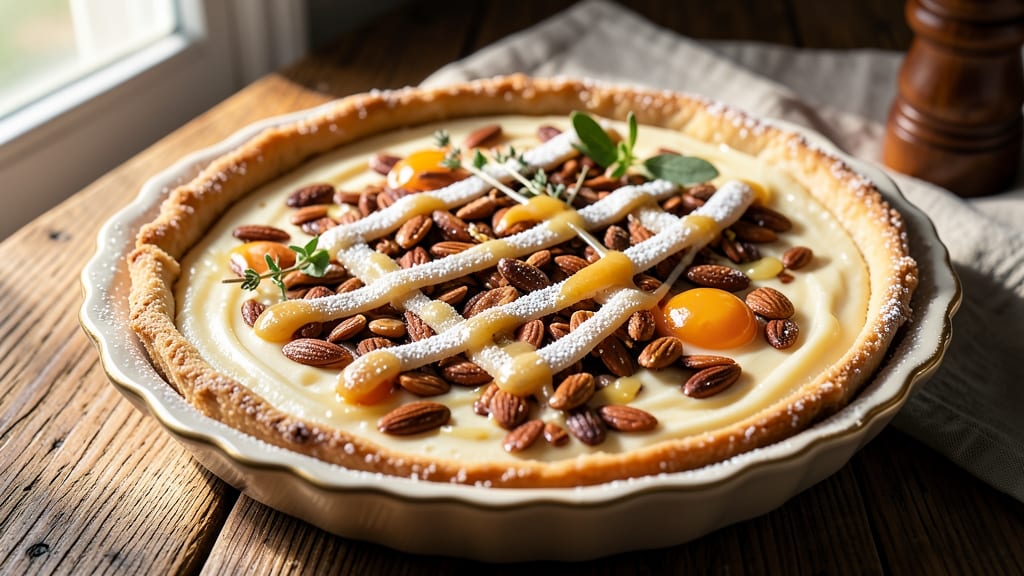
This almond pie filling recipe delivers the perfect balance of nutty crunch and velvety swirls that elevate any dessert. The secret lies in finely chopped almonds and a rich custard base that thickens beautifully when baked, creating that signature marbled texture.
I developed this version after years of testing—it’s foolproof for both beginners and experienced bakers, with a texture that’s neither too grainy nor too runny.
The filling comes together in just 15 minutes of prep, with a 30-minute baking time that transforms simple ingredients into something extraordinary. Toasted almonds add depth, while cornstarch ensures the custard holds its shape without separating.
A touch of vanilla and lemon zest brightens the flavor, making it versatile for pies, tarts, or even ice cream toppings.
What you’ll end up with is a golden, marbled filling that’s rich, slightly crunchy, and perfectly set—ideal for a classic lattice-topped pie or a rustic free-form tart. The almond flavor shines through without overpowering, and the custard stays luscious even when chilled.
Serve it warm with whipped cream or ice cold for a refreshing contrast.
This recipe scales easily for crowds, and the leftovers keep well in the fridge for up to 5 days, making it perfect for meal prep or holiday baking. Whether you’re a pie enthusiast or just love almond-based desserts, this filling will become your go-to for any occasion.
Ingredients for almond pie filling
Toasted almonds, velvety custard, and golden swirls—this filling delivers restaurant-quality texture in just 15 minutes of prep.
| Ingredient | Amount | Notes |
|---|---|---|
| Almonds, finely chopped 🥜 | 2 cups | Toasted for enhanced flavor |
| Granulated Sugar 🍚 | 1 ½ cups | Light brown preferred for depth |
| Cornstarch 🌾 | ¼ cup | For perfect custard texture |
| Whole Milk 🥛 | 1 ½ cups | Full-fat for richness |
| Large Eggs 🥚 | 4 whole | Room temperature for smooth blend |
| Unsalted Butter 🧈 | ½ cup | Cold, cubed for marbling |
| Pure Vanilla Extract 🌿 | 1 tbsp | High-quality, Madagascar preferred |
| Lemon Zest 🍋 | 1 tbsp | Freshly grated for brightness |
| Salt 🧂 | ¼ tsp | Kosher or sea salt |
| Lemon Juice 🍋 | 1 tbsp | Freshly squeezed |
The almonds are non-negotiable—toasted until golden for that nutty depth. Trader Joe's sells pre-toasted almonds in bulk, but if you're toasting yourself, don't walk away: they burn fast. For the sugar, light brown adds caramel notes that dark brown can overpower. The cornstarch is your secret weapon—it keeps the custard silky without separating, even when baked. I always use Archer's brand because it's finely milled and reliable.
No vanilla extract? Vanilla bean paste works too, though it'll leave tiny specks. Short on lemon zest? Substitute orange zest at the same amount, but the lemon's acidity balances the sweetness better. The butter must be cold—cut it into tiny cubes so it melts slowly and creates those signature swirls. Using salted butter? Reduce the added salt by half. And if you're worried about the eggs, pasteurized eggs from the store are safe for baking.
This filling keeps beautifully—5 days in the fridge sealed in an airtight container. For longer storage, freeze portions in 1-cup increments wrapped tightly in plastic. Thaw overnight in the fridge before using. Pro tip: Warm the filling gently before serving to bring out those almond aromas. Leftovers make amazing ice cream toppings or tart fillings—just reheat with a splash of milk to restore creaminess.
Why You'll Love This Recipe
- Five-Ingredient Magic: I swear by this list—no weird spices, no fancy techniques. Just toasted almonds, sugar, cornstarch, milk, and eggs. That’s it. The cornstarch thickens it perfectly without gummy mess, and the eggs bind it so smoothly.
- Nutty Luxury: The first time I tasted this, I thought, This is what fancy desserts taste like—but without the bakery price tag. The almonds add that buttery, toasty depth, while the sugar caramelizes just enough to make every bite feel like a treat.
- Pie or No Pie: Honestly, I make this more often for breakfast than dessert. Stir it into yogurt, dollop it on toast, or even mix it into oatmeal. The filling keeps for days in the fridge, so it’s my go-to when I need something sweet but don’t want to bake.
- Budget-Friendly Indulgence: Almonds might seem pricey, but a little goes a long way here. A single batch stretches to fillings for pies, cheesecakes, or even a quick custard. And since it’s just pantry staples, I never feel guilty about making extra—leftovers just get repurposed.
Step-by-step instructions for almond pie filling
Here's how to create a silky-smooth almond custard with perfect texture and bold flavor.
Toast the Almonds for Maximum Flavor
Preheat your oven to 350°F and spread the 2 cups almonds, finely chopped on a rimmed baking sheet in a single layer. Toast them for 8-10 minutes, stirring halfway, until they turn a beautiful golden brown and release an intoxicating nutty aroma.
This toasting step is crucial—it deepens the almond flavor and removes any bitterness. Watch them closely after 7 minutes as they burn quickly. Let them cool completely before using, about 5 minutes at room temperature. The toasted almonds should still be warm but not hot when you add them to your custard mixture.
Create the Custard Base
In a medium saucepan, combine the 1.5 cups granulated sugar, 0.25 cup cornstarch, 1.5 cups whole milk, 1 tbsp lemon zest, and 0.25 tsp salt. Whisk vigorously until the sugar and cornstarch dissolve completely—you shouldn't see any graininess.
Place the saucepan over medium heat and cook for 5-7 minutes, stirring constantly with a wooden spoon, until the mixture thickens enough to coat the back of the spoon. This creates your custard base that will later incorporate the eggs and butter for that signature almond pie texture. The mixture should be smooth and slightly translucent when you lift the spoon.
Temper the Eggs for Perfect Texture
In a separate large bowl, whisk together the 4 whole large eggs, 0.5 cup unsalted butter (cold, cubed), 1 tbsp pure vanilla extract, and 1 tbsp lemon juice. This is where the magic happens—tempering the eggs prevents them from scrambling when they hit the hot custard base.
Slowly pour about 1 cup of the hot custard base from the saucepan into the egg mixture while whisking continuously. Then, pour the tempered egg mixture back into the saucepan. Return to medium-low heat and cook for another 5-7 minutes, stirring constantly, until the mixture thickens to a pudding-like consistency that coats the spoon and leaves a clear path when you draw your finger through it.
Fold in Toasted Almonds
Remove the saucepan from heat and let the custard cool for 2-3 minutes. Then, gently fold in the 2 cups toasted almonds, finely chopped using a spatula, being careful not to overmix. The almonds should be evenly distributed throughout the custard, creating those beautiful nutty swirls in your final pie.
For best results, transfer the filling to a clean bowl and press plastic wrap directly onto the surface to prevent a skin from forming. Let it cool completely to room temperature before using. This filling will keep in the refrigerator for up to 3 days, making it perfect for ahead-of-time preparation.
Pro Tips For Making Almond Pie Filling
- Toast the Almonds First: I learned this the hard way—raw almonds taste bitter and dull in the filling. Lightly toast them in a dry pan over medium heat for 3-4 minutes until fragrant, then chop. The extra effort makes the flavor sing, especially when balanced with sugar.
- Whisk Eggs Until Ribbon Stage: That means stretching the beaten eggs between your whisk until a slow ribbon forms. Under-whisked eggs make the filling lumpy, and over-whisked ones can turn it rubbery. Aim for glossy but not stiff—this is the thing that matters most for a silky texture.
- Skip the Cold Milk: Warm the milk to room temperature first. Cold milk slows down the cornstarch’s thickening power, leading to a thinner, less stable filling. Just 30 seconds in the microwave or a quick rinse under warm water does the trick.
- Strain Out the Grit: No matter how finely you chop almonds, some grit sneaks in. After mixing everything, strain the filling through a fine-mesh sieve into your pie crust. It’s tedious, but your teeth—and your guests—will notice the difference. (Yes, even if you’re impatient like me.)
Common mistakes when making perfect results
Overmixing the Almonds
I’ve seen this happen more times than I can count—when you fold in those toasted almonds too vigorously, you end up with a grainy, uneven texture instead of those beautiful swirls. The key is to use a spatula and gently fold just until the almonds are distributed.
Think "marble cake" texture, not "almond butter." Overmixing also releases excess almond oils, which can make your filling taste bitter. 🥜
Skipping the Tempering Step
This is where most custard-based fillings go wrong. Pouring hot custard directly into raw eggs causes them to scramble instantly, giving you a lumpy, unappetizing mess. Always temper the eggs by slowly adding 1 cup of hot custard to the egg mixture while whisking continuously.
This gradual temperature adjustment keeps the proteins smooth and creamy. I’ve ruined more fillings than I’d like to admit by skipping this step—don’t make my mistake!
Using the Wrong Sugar
Light brown sugar is your best friend here—it adds subtle caramel notes that dark brown sugar can overpower. If you reach for white sugar, your filling will taste flat and lack depth.
And for heaven’s sake, don’t substitute powdered sugar—it changes the texture entirely. The 1.5 cups light brown sugar in this recipe is non-negotiable for that perfect balance of sweetness and richness.
Not Toasting the Almonds
Raw almonds taste bland and can even have a slight bitterness that ruins the delicate flavor of the custard. Toasting them until golden brown (about 8-10 minutes at 350°F) brings out their natural oils and nutty aroma.
Pro tip: Toast them in a single layer on a baking sheet so they brown evenly. If you’re in a rush, you can toast them in a dry skillet over medium heat for 3-4 minutes, but watch them like a hawk—they burn faster than you think. 🔥
Ignoring the Cornstarch
The 0.25 cup cornstarch is what gives this filling its signature silky texture. Without it, your custard will be too thin and watery, especially after baking. Some recipes use flour, but cornstarch thickens better and doesn’t add a floury taste.
If you’re out of cornstarch, arrowroot powder works in a pinch, but use the same amount. And for the love of pie, don’t skip it entirely—your filling will thank you.
Overcooking the Custard Base
Once your custard starts to thicken, it’s easy to keep stirring and let it cook too long, turning it into glue instead of a luscious filling. The moment it coats the back of a spoon (5-7 minutes over medium heat), remove it from the heat.
Overcooking causes the custard to break and can make your filling grainy. Trust the puddling test: When you draw your finger through the mixture, it should leave a clear path, not a thick, sticky line.
Nutrition facts
Frequently asked questions
Can I use almond flour instead of chopped almonds?
Not for this recipe—almond flour is much finer and will create a dense, cake-like texture rather than the signature nutty swirls. For the best results, stick with finely chopped toasted almonds. If you're short on time, you can pulse whole almonds in a food processor for 10-15 seconds to get a similar texture, but don't over-process or they'll turn into butter!
How do I prevent the filling from separating?
Proper tempering and cornstarch are your best defenses. Always temper the eggs by slowly adding hot custard to them while whisking, and never let the custard boil. The 0.25 cup cornstarch also helps stabilize the mixture. If it starts separating after baking, gently reheat it with 1-2 tablespoons milk while stirring constantly until smooth.
Can I make this filling ahead of time?
This filling actually tastes better after resting. Prepare it up to 3 days in advance and store it in an airtight container in the fridge. For longer storage, freeze portions in 1-cup increments for up to 3 months. Thaw overnight in the fridge before using—never at room temperature. The flavors meld beautifully overnight!
What's the best pie crust to pair with this filling?
A classic double crust with a lattice top works beautifully, but a simple pâte sucrée (sweet shortcrust) also complements the almond flavor. For extra elegance, try a crustless tart in a buttery tart pan. The key is a slightly sweet crust that won't overpower the almond's nutty notes. Pre-bake your crust for 10-12 minutes at 375°F to prevent sogginess.
Why does my filling taste bitter?
Most likely, your almonds weren't toasted enough or you overmixed them. Always toast almonds until golden brown (not just warm) and fold them gently. Another common cause is using too much lemon zest—stick to 1 tablespoon. If the bitterness persists, try adding 1/2 teaspoon more vanilla extract or a pinch of salt to balance the flavors.