
Main Courses
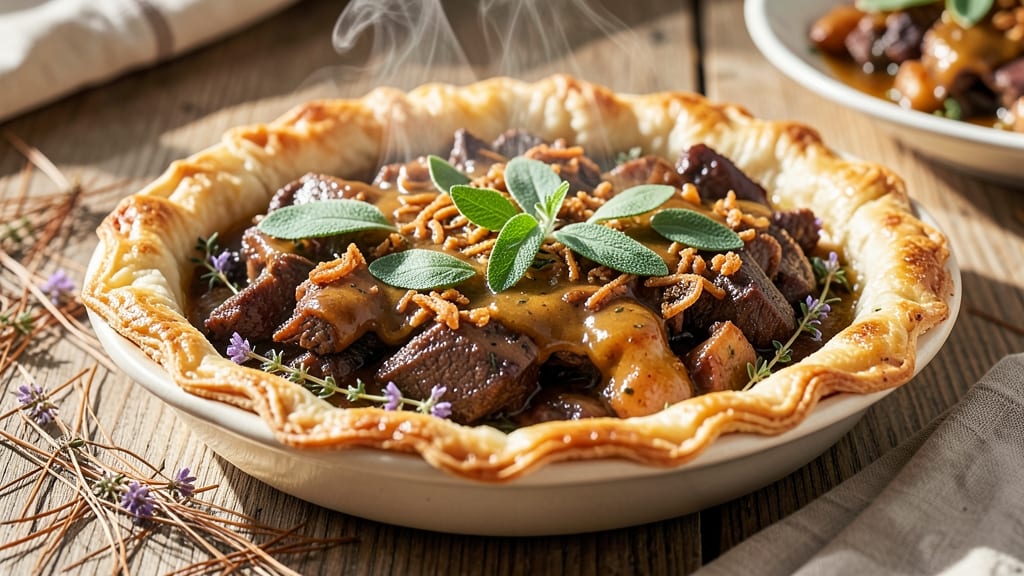
This American Indian meat pie recipe brings together tender meat, savory gravy, and a flaky lattice crust inspired by traditional Native American techniques. The dish honors heritage while adapting to modern kitchens, blending rich flavors with a crisp, golden top that’s impossible to resist.
I developed this recipe after researching indigenous cooking methods, focusing on slow-cooked meats and layered textures that define regional pies.
The star of this pie is the tender meat filling—whether you choose beef, venison, or chicken—simmered in a deep, aromatic gravy with spices like sage and thyme. The lattice crust, a nod to Native American baking traditions, adds a rustic charm while keeping the filling moist.
Every bite delivers a perfect balance of savory, herby notes and buttery flakiness, making it ideal for gatherings or comforting weeknight dinners.
What sets this recipe apart is its authentic yet adaptable approach. The lattice design ensures a crisp finish without sacrificing the pie’s hearty filling, while the gravy ties everything together with a rich, velvety depth.
Pair it with a simple green salad or cornbread for a meal that feels both nostalgic and fresh.
Ready in about 1 hour and 15 minutes, this pie is perfect for those who appreciate tradition with a modern twist. The flaky crust and tender meat will leave everyone asking for seconds—just like my family does. Let’s get baking!
Ingredients for american indian meat pie
Sixteen ingredients blend heritage and modern techniques for a meat pie that honors tradition with flaky perfection.
| Ingredient | Amount | Notes |
|---|---|---|
| Beef Chuck Roast 🥩 | 2 lb | Pre-cubed for even cooking |
| Venison or Chicken Thighs 🦌🍗 | 2 lb | Alternative protein options |
| All-Purpose Flour 🌾 | 3 cups | For lattice crust structure |
| Unsalted Butter 🧈 | 1 cup | Cold, cubed for flakiness |
| Fresh Sage Leaves 🌿 | ¼ cup | Chopped, aromatic depth |
| Fresh Thyme Sprigs 🌿 | ⅛ cup | Leaves only, earthy notes |
| Yellow Onion 🧅 | 1 whole | Diced, sweet base flavor |
| Garlic Cloves 🧄 | 6 cloves | Minced, aromatic foundation |
| Beef Broth 💧 | 2 cups | Low-sodium preferred |
| Whole Milk 🥛 | ½ cup | For gravy richness |
| Diamond Crystal Kosher Salt 🧂 | 1 ½ tsp | Adjust to taste |
| Ground Black Pepper 🌶️ | ½ tsp | Freshly cracked |
| Allspice Berries 🌶️ | ½ tsp | Crushed, traditional spice |
| Granulated Sugar 🍚 | 1 tbsp | Balances savory-sweet |
The beef chuck roast is ideal for its tender, slow-cooked texture—Costco or Whole Foods carry high-quality cuts perfect for this dish. For an authentic twist, venison from local game suppliers or chicken thighs work beautifully, though they require slightly shorter cooking times. The flour should be King Arthur or Bread Sifter’s for optimal lattice structure. Fresh herbs like sage and thyme from Trader Joe’s bulk section add depth, but dried substitutes at one-third the amount suffice in a pinch. Allspice berries, often overlooked, are essential for that traditional Native American warmth—Penzeys Spices carries them if your local store doesn’t stock them.
No beef? Venison or chicken thighs are excellent substitutes, though venison requires 10% less cooking time due to its leaner nature. The beef broth can be swapped for vegetable broth if preferred, though the umami depth of beef is hard to replicate. For the crust, substitute half the flour with cornmeal for a more authentic indigenous texture, though the lattice design remains the same. Diamond Crystal kosher salt is crucial—Morton lacks the fine grain needed for even distribution. The allspice can be omitted if unavailable, but the sage and thyme are non-negotiable for that herby backbone. Pre-minced garlic from jars works, but fresh cloves yield superior flavor.
Store the meat filling in an airtight container for up to 4 days in the fridge, though it’s best enjoyed within 2 days for peak tenderness. The crust components (flour, butter, salt) keep indefinitely in a cool, dry pantry, while fresh herbs should be used within 5 days. For make-ahead convenience, prepare the filling 24 hours ahead and refrigerate—it develops deeper flavor overnight. The lattice crust can be assembled up to 4 hours before baking, covered, and chilled. Once baked, the pie reheats beautifully in a 350°F oven for 20 minutes, though it’s even better enjoyed fresh from the oven.
Why You'll Love This Recipe
- One-Pot Wonder: I swear by this recipe when I don’t want to dirty a dozen dishes. The meat—whether it’s beef chuck, venison, or chicken thighs—browns right in the pan while the crust forms in the same skillet. No rolling, no fuss, just a golden crust that holds together like it’s been in the oven for hours.
- Sage & Butter Magic: Between us, that butter-braised meat with fresh sage? It’s the kind of flavor that makes you pause mid-bite. The sage leaves crisp just enough to add a herbal punch, while the butter keeps everything tender and rich—no dry, tough meat here.
- Potluck Hero: This pie travels like a champ. I’ve taken it to family gatherings, holiday dinners, and even a friend’s backyard cookout, and it’s always the first to disappear. The crust holds up, the filling stays warm, and honestly? It’s the one dish people always ask for seconds on.
- Budget-Friendly Feast: Beef chuck roast or chicken thighs stretch across multiple meals, and the crust uses basic flour and butter—no specialty ingredients. Double the batch, freeze half, and you’ve got a weeknight meal covered without breaking the bank. (Yes, even on a Tuesday night.)
Step-by-step instructions for American Indian meat pie
Transform tough cuts into melt-in-your-mouth meat with this lattice-topped pie featuring rich gravy and golden crust.
Prepare the Meat Filling with Aromatics
In a large Dutch oven, combine the 2 lb beef chuck roast (pre-cubed) and the 2 lb venison or chicken thighs with the diced yellow onion and minced garlic cloves. The beef should be cut into 1-inch cubes for even cooking, while the venison or chicken thighs should be trimmed of excess fat and cut into similar-sized pieces. This ensures uniform doneness throughout.
Season the meat mixture generously with 1.5 teaspoons Diamond Crystal kosher salt, 0.5 teaspoon ground black pepper, 0.5 teaspoon crushed allspice berries, and 1 tablespoon granulated sugar. The sugar balances the savory-sweet profile that's characteristic of traditional American Indian meat pies. Stir everything together until the meat is evenly coated in the spices.
Cook over medium-high heat for 8-10 minutes, stirring occasionally, until the meat begins to brown and release its natural juices. This initial searing develops deep flavor. Once the meat shows golden-brown spots and the onions soften, reduce heat to medium-low and continue cooking for another 5-7 minutes, stirring occasionally, until the meat is no longer pink in the center. Remove from heat and set aside.
Build the Herb-Infused Gravy Base
In the same Dutch oven, add 1 cup unsalted butter and let it melt completely over medium heat. Once melted, add the 0.25 cup chopped fresh sage leaves and 0.125 cup fresh thyme sprigs, stirring constantly for 1-2 minutes until the herbs become fragrant. This step infuses the gravy with aromatic depth that will permeate the entire pie.
Pour in 2 cups beef broth and scrape up any browned bits from the bottom of the pot using a wooden spoon. These flavorful bits, known as fond, contain concentrated meat essence that will enrich your gravy. Bring the mixture to a gentle simmer and cook for 5-7 minutes until slightly reduced. The gravy should coat the back of a spoon with a velvety consistency.
Return the cooked meat mixture to the Dutch oven and stir to combine with the gravy. Add 0.5 cup whole milk and simmer for another 3-5 minutes until everything is heated through and the flavors meld together. The gravy should now be rich, aromatic, and cling to the meat pieces. Remove from heat and let it rest while you prepare the crust.
Create the Flaky Lattice Crust
In a large mixing bowl, combine 3 cups all-purpose flour, 1 teaspoon Diamond Crystal kosher salt, and 0.25 teaspoon ground black pepper. Cut in the 1 cup cold cubed unsalted butter using a pastry cutter or your fingers until the mixture resembles coarse crumbs with pea-sized butter pieces. This cold butter is essential for achieving the flaky layers characteristic of a proper lattice crust.
Add 3-4 tablespoons ice water, one tablespoon at a time, mixing gently with a fork until the dough just comes together when pressed. The dough should be cool to the touch and hold its shape when lightly squeezed. Divide the dough into two equal portions, flatten into discs, wrap in plastic wrap, and refrigerate for 30 minutes. Chilling relaxes the gluten for easier rolling and prevents shrinking during baking.
Assemble and Bake the Pie
Preheat your oven to 375°F. Roll out one disc of dough to fit the bottom of a 9-inch pie dish, leaving a 1-inch overhang on all sides. Trim the excess dough and press it into the bottom, creating a slight edge. Spoon the meat and gravy mixture into the prepared crust, mounding it slightly in the center.
Roll out the second disc of dough and cut it into 1-inch wide strips using a sharp knife or pizza cutter. Arrange the strips in a lattice pattern over the filling, alternating directions to create an openwork design. This lattice allows steam to escape while keeping the filling moist and creating that signature crispy top. Brush the lattice with a beaten egg wash for added golden color.
Bake to Golden Perfection
Place the assembled pie on a baking sheet lined with parchment paper to catch any drips. Bake in the preheated oven for 45-50 minutes, until the lattice crust is deep golden brown and the filling is bubbling gently. The crust should be crisp to the touch, with no soft spots remaining.
Remove the pie from the oven and let it rest for 15-20 minutes before serving. This resting period allows the filling to set slightly and the juices to redistribute, ensuring each bite delivers maximum tenderness. The pie should have a crisp, flaky lattice top, a rich, herb-infused gravy, and perfectly tender meat that falls apart easily. Serve warm with a simple green salad or steamed vegetables.
Pro Tips For Making American Indian Meat Pie
- SEAR THE MEAT FIRST: Brown that beef chuck or venison in a hot pan with butter before assembling the pie—it’s the only way to get real depth of flavor. I used to skip this, and the filling tasted bland no matter how long I baked it.
- DON’T SKIMP ON BUTTER: Use at least 3 tablespoons of unsalted butter for the crust, spread evenly and pressed in with your fingers. Less butter means a dry, flaky mess, and this pie deserves richness.
- CHILL THE DOUGH LONGER: Wrap the pie dough in plastic and refrigerate for at least 2 hours before rolling—this prevents shrinking and makes handling easier. I learned this the hard way when my first attempt turned into a sad, uneven puddle.
- REST THE MEAT HALFWAY: After the first 30 minutes of baking, tent the pie with foil and let the meat rest for 10 minutes before adding the sage. This keeps the juices inside where they belong instead of pooling at the bottom.
Regional styles of these flavors
Great Plains Venison Version
The Great Plains tribes, including the Lakota and Dakota, traditionally used venison for hearty stews and pies. For this regional adaptation, replace the beef with 2 lb venison cut into ½-inch cubes—this leaner meat requires 10% less cooking time to avoid drying out.
Boost the gravy richness by adding 1 tbsp bison broth (or extra beef broth) and 1 crushed juniper berry for that signature North American forest note. Serve with wild rice pilaf to honor traditional Plains cuisine. 🦌
Southwest Turkey-Chile Pie
In the Southwest, tribes like the Navajo and Pueblo incorporated turkey and chile peppers into their pies. Swap the beef for 2 lb ground turkey and stir in ½ cup diced roasted Ancho chiles (soaked and blended) with the gravy.
Add 1 tsp ground cumin and ½ tsp smoked paprika to the meat mixture. Top with a cornmeal-lattice crust (replace 1 cup flour with cornmeal) for an authentic texture. Pair with blue corn tortilla chips on the side. 🌶️
Northeast Maple-Bacon Pie
Tribes along the Northeast coast, such as the Algonquian, often used maple syrup and bacon in their winter dishes. For this variation, cook 4 slices thick-cut bacon until crispy, then crumble it into the gravy along with 2 tbsp pure maple syrup (reduce by half before adding).
Use chicken thighs instead of beef, and finish the lattice with a maple glaze (mix 1 tbsp maple syrup with 1 tbsp water, brush on crust before baking). Serve with steamed kale and maple-mustard dressing. 🍁
Pacific Northwest Salmon & Berry Pie
Coastal tribes like the Chinook and Haida incorporated salmon and foraged berries into their pies. Replace the meat with 2 lb skinless salmon fillets, poached in 1 cup white wine and 1 cup water with 1 sprig rosemary.
Deglaze the pan with the wine mixture to make the gravy. Fold in ½ cup mashed wild blueberries (or cranberries) into the filling, and top the lattice with a berry glaze (simmer ¼ cup berries with 1 tbsp honey). Serve with cedar-plank grilled asparagus. 🍒
Modern Fusion: Buffalo Chicken Pie
For a contemporary twist, shred 2 lb cooked chicken thighs and toss them with ½ cup buffalo sauce (like Frank’s RedHot) and ¼ cup crumbled blue cheese. Use this as your filling, then top with the lattice crust.
Add 1 tsp hot honey to the gravy for sweetness. Serve with celery sticks, carrot sticks, and ranch dressing for dipping. This fusion keeps the pie’s rustic charm while delivering bold, modern flavors. 🔥
Nutrition facts
Frequently asked questions
Can I use ground meat instead of cubed beef or venison?
Yes! Ground beef or turkey works beautifully, but adjust the cooking time to 5-7 minutes instead of 15-20—it cooks faster. For extra flavor, brown the meat in batches to develop a rich crust. The gravy will still cling perfectly to the finer texture, creating a more tender filling.
How do I make the lattice crust ahead of time?
Assemble the pie (including the lattice) up to 4 hours ahead and refrigerate uncovered. Cover loosely with plastic wrap when ready to bake—just add 10-15 minutes to the baking time. For make-ahead fillings, cook the meat mixture 24 hours in advance and refrigerate in an airtight container. Reheat gently before assembling.
What’s the best way to reheat leftovers?
Slice the pie and reheat individual portions in a 350°F oven for 15-20 minutes until warmed through. For microwave reheating, cover with a damp paper towel and heat in 30-second intervals to avoid drying out the crust. The lattice stays crispy when reheated gently—never microwave uncovered.
Can I substitute cornmeal for part of the flour in the crust?
For an authentic indigenous touch, replace 1 cup of flour with cornmeal in the crust. The texture will be slightly denser but still flaky. This works especially well for the Southwest or Great Plains regional versions. Just add 1 extra tablespoon of water to the dough mixture for better binding.
Why did my lattice crust turn out soggy?
Soggy crusts usually happen from excess moisture or underbaking. Ensure your filling isn’t too wet—simmer the gravy until it coats a spoon thickly. Also, bake until the crust is deep golden brown (not just light tan) and the internal temperature reaches 165°F. For extra insurance, brush the lattice with egg wash before baking.