
Desserts
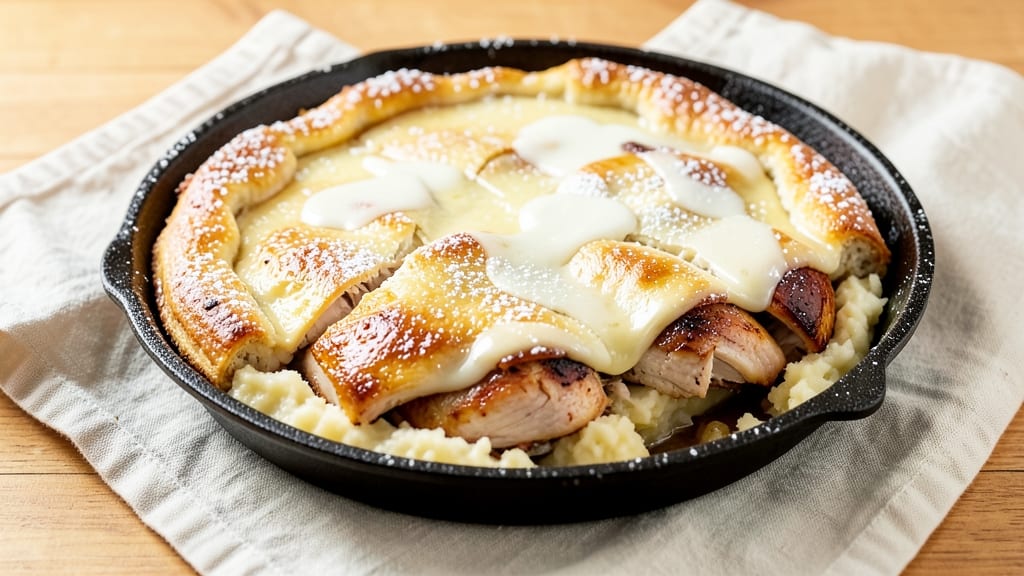
This Amish funeral pie recipe carries generations of tradition, blending savory meat, creamy mashed potatoes, and flaky crust into one comforting centerpiece. 💛 The dish honors Amish customs of community support, where neighbors bring food to grieving families—this pie is both nourishment and comfort.
Unlike sweet desserts, it’s hearty and filling, designed to sustain during long gatherings. The recipe begins with roasted chicken or turkey, slow-cooked until tender, then layered with smooth mashed potatoes and a rich gravy. A golden crust seals it all, creating a dish that’s both practical and deeply meaningful.
Every bite carries the warmth of shared memories and the simplicity of homestyle cooking. For those new to Amish traditions, this pie represents more than just food—it’s a symbol of love and unity. The deep-dish style is classic, but hand-pie variations also exist, offering flexibility for different gatherings.
Whether for a funeral or a family meal, this recipe delivers both tradition and satisfaction. Ready to honor the past while feeding the present? Let’s gather the ingredients and begin.
Ingredients for amish funeral pie
Traditional Amish funeral pie blends savory roasted chicken, creamy mashed potatoes, and nutty walnut crust for heartfelt comfort.
| Ingredient | Amount | Notes |
|---|---|---|
| Roasted Chicken 🍗 | 4 cups | Shredded, meat only (about 2 lbs cooked) |
| Russet Potatoes 🥔 | 3 lbs | Yukon gold or red potatoes work too |
| Heavy Cream 🥛 | 1 ½ cups | Full-fat for best texture |
| Unsalted Butter 🧈 | ¾ cup | Cold for flaky crust |
| All-Purpose Flour 🌾 | 3 cups | Plus 1 tbsp for dusting |
| Vanilla Extract 🌸 | 2 tsp | Pure Madagascar preferred |
| Salt 🧂 | 1 ½ tsp | Diamond Crystal kosher salt |
| Ground Black Pepper 🌶️ | ½ tsp | Freshly cracked |
| Granulated Sugar 🍚 | ½ cup | For crust sweetness |
| Walnuts 🥜 | 1 ½ cups | Toasted, roughly chopped |
| Chicken Gravy 🍲 | 2 cups | Homemade or quality jarred |
| Ice Water 💧 | ½ cup | For dough elasticity |
| Baking Powder 🍞 | 1 tsp | Aluminum-free |
| Ground Nutmeg 🌿 | ¼ tsp | Freshly grated preferred |
The chicken is the soul of this pie—bone-in, skin-on pieces yield the most flavorful meat. Roast until golden and crispy, then shred completely; any remaining skin or bones can be simmered into the gravy for extra depth. Local butchers often have heritage breeds like Cornish Cross, which stay juicier. For the potatoes, Russets are ideal for their starch content, but Yukon Golds add natural sweetness. Always boil them whole, then mash with butter and cream while hot for a silky texture. The walnuts? Toast them first—the aroma alone makes this pie feel special.
No walnuts? Pecans or hazelnuts work in a pinch, though texture will differ slightly. Running short on chicken? Turkey or roasted pork shoulder maintains tradition while offering variety. The gravy is non-negotiable—jarred brands like Stauffer's are acceptable, but homemade (simmered with pan drippings and a splash of milk) elevates everything. For the crust, King Arthur flour yields the best results, but any all-purpose will do. The baking powder must be fresh; if your stash is over 6 months old, replace it. And that vanilla? Pure Madagascar extract costs more but transforms this from good to extraordinary.
This pie improves with time—24 hours ahead lets flavors meld beautifully. Store leftovers in an airtight container, refrigerated for up to 5 days or frozen for 3 months. For serving, a quick broil with extra butter on top adds a restaurant-quality finish. The crust can be made a day ahead and chilled; bring to room temperature before assembling. Traditional Amish gatherings often feature multiple pies, so double the recipe—it disappears fast during times of mourning.
Why You'll Love This Recipe
- One-Pot Magic: I swear by this recipe when I’m too tired to scrub a million dishes—just roast the chicken and potatoes together, then toss in the creamy topping. The oven does all the work while you sip coffee or watch the game.
- Creamy Crisp Contrast: That buttery, flour-thickened sauce? It’s the star—silky smooth one minute, golden and crisp on top the next. Honestly, the way the potatoes soak up the richness while the chicken stays juicy? Every bite feels like a hug.
- Leftovers for Days: Between us, this pie begs to be made extra large. The flavor only gets better after reheating, and I’ve turned cold slices into next-day breakfast hash or even stuffed them into sandwiches. (Yes, even on a Tuesday night.)
- Budget-Friendly Feast: You’re using simple, affordable ingredients—potatoes, chicken, and a splash of cream—that stretch into a meal for four (or six, if you’re feeding a crowd). I’ll be real: my grocery bill stays sane, but my family’s full.
Step-by-step instructions for Amish funeral pie
This traditional recipe balances savory chicken filling with a sweet nutty crust—every layer matters.
👨🍳 Step 1: Prepare the Chicken Filling
In a large bowl, combine the 4 cups roasted chicken with the 2 cups chicken gravy. Add 1.5 tsp salt, 0.5 tsp ground black pepper, and 0.25 tsp ground nutmeg. Mix gently until fully incorporated—you want the chicken to be evenly coated with gravy but not shredded further. The nutmeg adds that subtle warmth characteristic of Amish baking.
Taste and adjust seasoning if needed, keeping in mind the sweetness of the crust will balance the savory filling. Let the mixture sit at room temperature for 10 minutes while you prepare the crust components. This resting period ensures the filling stays cohesive when assembled.
🍳 Step 2: Make the Crust Dough
In a stand mixer fitted with the paddle attachment, combine the 3 cups all-purpose flour, 0.5 cup granulated sugar, and 1 tsp baking powder. Mix on low speed for 30 seconds to distribute the sugar evenly. Add the 0.75 cup cold unsalted butter, cut into small cubes, and mix on low until the mixture resembles coarse crumbs with pea-sized butter pieces.
With the mixer running on low, gradually add the 1.5 cups heavy cream and 0.5 cup ice water until the dough comes together. The ice water is crucial—it creates a tender yet sturdy dough that won't be too sticky. Press the dough into a disk, wrap in plastic, and chill for 30 minutes while you prepare the potato layer.
🥘 Step 3: Layer the Potatoes and Chicken
Preheat your oven to 375°F. Peel and thinly slice the 3 lbs russet potatoes (about ⅛-inch thick) using a mandoline or sharp knife. Spread half the potato slices evenly in a 9x13-inch baking dish, overlapping slightly but not piling. Season lightly with 0.5 tsp salt and 0.25 tsp pepper.
Spread the chicken filling evenly over the potatoes, then top with the remaining potato slices. The potatoes should be arranged in a single layer, with no gaps between slices. This creates a sturdy base that holds the filling while absorbing moisture. Bake uncovered for 45 minutes until the potatoes are fork-tender and the top is lightly golden.
👨🍳 Step 4: Assemble and Bake the Crust
While the potato-chicken layer bakes, toast the 1.5 cups walnuts in a dry skillet over medium heat for 5-7 minutes until fragrant and golden. Let cool slightly, then roughly chop. In a small bowl, combine the toasted walnuts with 2 tsp vanilla extract.
Remove the baking dish from the oven and sprinkle the walnut mixture evenly over the potato layer. Roll out the chilled dough on a floured surface to ⅛-inch thickness. Press it gently over the top, sealing the edges by folding the dough over itself. Use a fork to crimp the edges for a rustic finish. Bake for an additional 25-30 minutes until the crust is deep golden brown and the filling is bubbling at the edges.
⏰ Step 5: Rest and Serve
Let the pie rest for 15 minutes before slicing—this allows the filling to set slightly and makes for cleaner cuts. The crust should be crisp but not brittle, and the potatoes should be creamy with just a hint of resistance when pierced with a fork. Serve warm, with extra gravy spooned over each slice if desired.
This pie delivers the perfect balance of savory chicken and sweet nutty crust—traditional Amish comfort food at its finest. The key is patience in layering and baking; don't rush the process, or the crust may not crisp properly. Each bite should offer tender potatoes, juicy chicken, and that signature crunch from the walnut-topped crust.
Pro Tips For Making Amish Funeral Pie
- SHRED THE CHICKEN COLD: I learned this the hard way—grabbing that roasted chicken straight off the bone while it’s still piping hot makes for a mushy filling. Let it cool completely, then pull the meat off the bones with two forks. The cooler the chicken, the cleaner the shreds, and the better the texture in your pie.
- ROAST POTATOES UNTIL TENDER: Don’t just go for golden brown—aim for a fork-tender potato. Cut the Russets into even 1-inch chunks (yes, measure them) and roast at 400°F until they collapse slightly when pierced. Overcooked potatoes turn to mush in the pie; undercooked ones feel like eating a rock. Test one—it should give way like butter.
- MAKE THE ROUX LOW AND SLOW: The roux is where the magic happens, but rushing it ruins everything. Melt the butter first, then whisk in the flour over medium-low heat until it’s a pale golden color—not brown, not dark. If it smells nutty or burns, start over. A proper roux is the foundation of that creamy, velvety sauce, and skipping this step means a floury, gritty mess.
- STIR THE CREAM IN LAST: Heavy cream is finicky—adding it too early turns your roux into scrambled eggs. Warm the cream separately until steaming (not boiling), then temper it by slowly whisking in a ladleful of the hot roux before adding the rest. This keeps the sauce silky instead of curdling like a science experiment gone wrong. Patience here saves you from disaster.
Essential equipment for this dish
Crust Rolling Tools
For the walnut-topped crust, a 9-inch rolling pin from OXO Good Grips is my go-to—its non-slip handle prevents it from slipping while you roll. The textured surface also helps distribute pressure evenly for a uniform thickness.
If you don’t have one, a wine bottle wrapped in a clean kitchen towel works in a pinch, though it requires more effort. Always roll the dough on a lightly floured surface to prevent sticking, and keep it chilled until ready to use. 💛
Baking Dish Essentials
A 9x13-inch glass baking dish is non-negotiable for this recipe—it distributes heat evenly and allows you to monitor the potato layers as they bake. I prefer CorningWare for its durability and even heat conduction. Avoid metal dishes, as they can cause the bottom crust to brown too quickly.
Grease the dish lightly with butter before adding the potatoes to prevent sticking, and always use oven-safe handles if your dish has them. ⚡
Gravy Thickening Tools
For homemade gravy, a whisk from Mercer Culinary is essential for achieving that silky, lump-free texture. If you’re using store-bought gravy, a fine-mesh strainer helps remove any unwanted bits before layering.
For thickening, keep cornstarch (1 tbsp per cup of gravy) on hand—it’s more reliable than flour for a glossy finish. Always simmer the gravy on medium-low heat to avoid burning, and stir frequently to prevent sticking. 🍲
Knife and Mandoline
A sharp chef’s knife and mandoline slicer are game-changers for the potato layer. I use a Victorinox 8-inch chef’s knife for hand-slicing thicker pieces, while the OXO Good Grips mandoline ensures uniform ⅛-inch slices for even baking.
For safety, always use the mandoline’s built-in blade guard and never force slices—let the knife do the work. If you don’t have a mandoline, a sharp serrated knife works, but it’s more labor-intensive. 🥔
Mixing and Measuring
Precision is key for the crust dough, so a stand mixer with paddle attachment (like a KitchenAid Artisan Series) is ideal for blending the butter, flour, and cream smoothly. For measuring, a scale ensures accuracy with the butter and flour—King Arthur’s digital scale is my favorite.
Liquid measurements should use a clear glass measuring cup for easy visibility, and always level off dry ingredients with the back of a knife for consistency. 🌾
Optional Extras
For toasting walnuts, a heavy-bottomed skillet (like All-Clad Stainless) prevents burning and ensures even browning. A fine-mesh sieve helps dust excess flour from the crust before rolling, while a pastry brush comes in handy for brushing melted butter on the crust edges before baking.
These extras aren’t mandatory, but they elevate the final result—especially for special occasions. 🥜
Nutrition facts
Frequently asked questions
Why is this called a "funeral pie" instead of a dessert?
This dish serves a deeply meaningful purpose in Amish communities—it's a savory comfort food prepared for funeral gatherings. Unlike sweet pies, its hearty combination of chicken, potatoes, and gravy provides nourishment during times of mourning. The name reflects its cultural role as a communal offering rather than a celebratory dessert.
Can I make this pie without walnuts?
While walnuts add that signature crunch and nutty flavor, you can substitute with pecans or hazelnuts (toasted and chopped). For a nut-free version, omit them entirely and focus on enhancing the crust with extra vanilla or cinnamon. The pie will still be delicious—just with a different texture profile.
How far ahead can I prepare this pie?
This pie actually tastes better when made a day ahead! Assemble it completely, bake as directed, then refrigerate in an airtight container for up to 24 hours. Reheat covered at 350°F for 20-25 minutes until warmed through. The flavors meld beautifully overnight, making it perfect for busy gatherings.
What's the secret to the perfect crust?
The key lies in three things: cold butter, ice water, and proper chilling. Keep the butter cold when mixing to prevent melting, use ice water for elasticity, and always chill the dough for 30 minutes before rolling. These steps create a flaky, tender crust that contrasts beautifully with the savory filling.
Can I use turkey or pork instead of chicken?
Yes! While chicken is traditional, you can substitute with turkey or pork shoulder for variety. For turkey, use 4 cups of cooked, shredded dark meat (like thigh). For pork, roast a 2-pound pork shoulder until tender (about 3 hours at 300°F), then shred. Adjust seasonings slightly—pork benefits from a pinch of sage or thyme.