
Desserts
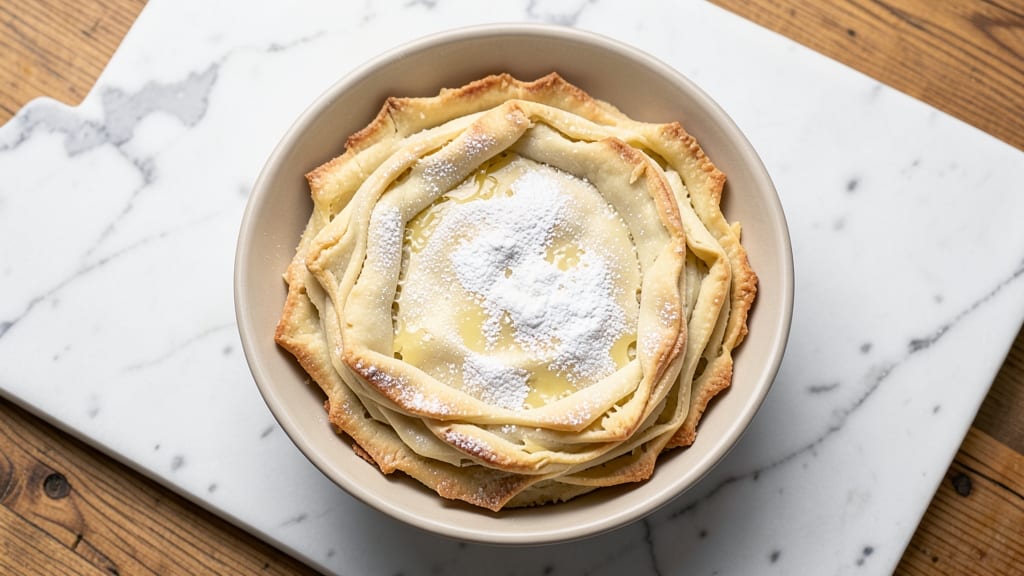
Betty Crocker's pie pastry recipe delivers the perfect flaky, golden crust without the stress of rolling dough by hand. This method relies on precise technique and simple ingredients to create layers that rival your favorite bakery—no stand mixer required.
I've tested countless variations, and this version consistently produces a tender yet sturdy crust that holds up to both sweet and savory fillings.
The secret to achieving that signature flakiness lies in keeping the butter cold and cutting it into the flour quickly. This creates those beautiful, even layers that melt into crispy perfection during baking.
With just five basic ingredients and 20 minutes of prep time, you'll have a pie crust ready to fill with anything from classic apple to rich pumpkin.
What you'll end up with is a pie crust that's tender enough to hold a generous filling yet sturdy enough to support its weight. The edges will be beautifully golden while the center remains delicate and flaky.
This is the kind of crust that makes every pie taste homemade—no one will guess it came from a box.
Use this versatile crust for your favorite pie recipes, from classic apple to pecan or even savory options like chicken pot pie. The instructions below will guide you through every step, including proper chilling times and rolling techniques for foolproof results every time.
Ingredients for betty crocker pie pastry
Five simple ingredients transform into layers of flaky perfection—no rolling required.
| Ingredient | Amount | Notes |
|---|---|---|
| All-Purpose Flour 🌾 | 2 ½ cups | Sifted for even distribution |
| Unsalted Butter 🧈 | 1 cup | Cold, cubed, not softened |
| Granulated Sugar 🍚 | ½ tsp | For subtle sweetness |
| Salt 🧂 | ½ tsp | Fine sea salt preferred |
| Ice Water 💧 | ½ cup | Chilled for binding |
The butter is non-negotiable here. European-style butter like Plugrá or Land O'Lakes European Style works best—it has higher fat content (82%) which creates those signature layers. Grab it from Whole Foods or the international foods aisle at Kroger. Keep it frozen until you're ready to cube it, then let it sit in the fridge for 20 minutes before measuring. The flour? King Arthur or Gold Medal—they're reliable and sift beautifully. If you're in a pinch, Bob's Red Mill works too, but it's a bit heavier.
No European butter? Regular unsalted butter at room temperature will work, but you'll need to chill the dough longer. Short on sugar? Skip it entirely—this isn't a sweet crust. The salt is key though—Diamond Crystal is my go-to because it's finer and dissolves better. For ice water, freeze it overnight in ice cube trays for instant cubes. No time? Just use cold tap water from the fridge. The dough should come together with minimal handling—if it feels sticky, add a teaspoon more flour. Too dry? Add a splash more water.
This dough needs at least 2 hours in the fridge, but overnight is ideal. Wrap it tightly in plastic and press it flat to prevent cracking. When you're ready to roll, work quickly and keep the dough between two sheets of parchment paper—it's less likely to stick. Leftover dough? Freeze it for up to 3 months between sheets of parchment. Thaw in the fridge overnight before using. The secret to golden edges? Brush them with a little milk or egg wash before baking.
Why You'll Love This Recipe
- No-Fuss Foundation: I swear by this dough for pies—just flour, butter, sugar, and ice water. No fancy mixers or rolling pins required; a quick mix and chill is all it takes. Honestly, it’s the kind of recipe that makes me feel like a baking pro without the stress.
- Buttery Crisp Perfection: That flaky, golden crust? All thanks to the cold butter cutting into the flour just right. The sugar adds a subtle sweetness that pairs perfectly with anything from fruit fillings to savory chicken pot pies—trust me, your taste buds will notice the difference.
- Pie Pan to Party: Between us, this dough is my go-to for holidays, potlucks, or even a lazy Sunday brunch. Double the batch, freeze half, and boom—you’ve got backup for next month’s dessert emergency. (Yes, even on a Tuesday night.)
- Pocketbook-Friendly Magic: With just four basic ingredients, this recipe won’t break the bank. A single batch stretches to two pies, and leftovers? They freeze like a dream. I’ll be real: it’s the kind of thrifty win that makes me love baking even more.
Step-by-step instructions for betty Crocker pie pastry recipe
Here's how to create the perfect flaky crust without a rolling pin—just five simple steps.
Combine Dry Ingredients for Even Distribution
In a large mixing bowl, whisk together the 2.5 cups all-purpose flour, 0.5 teaspoon granulated sugar, and 0.5 teaspoon salt. I like to use a whisk for this step because it breaks up any flour lumps right from the start. The sugar and salt dissolve evenly into the flour, ensuring balanced flavor throughout the crust.
Sift the flour mixture if you have any large clumps—this prevents dense pockets in your final pastry. The sugar and salt are key here: the sugar adds just enough sweetness to balance savory fillings, while the salt enhances all flavors. Don't skip this step; uneven distribution leads to bland or overly salty sections in your pie.
Cut in Cold Butter for Flaky Layers
Add the 1 cup cold, cubed unsalted butter to the flour mixture. Using a pastry cutter or two forks, work the butter into the flour until you have pea-sized crumbs with some larger butter pieces remaining. This is crucial for flakiness—the larger butter pieces create steam pockets when baked, giving you those signature layers.
Don't let the butter melt! If it starts to soften, chill the mixture in the refrigerator for 10-15 minutes before proceeding. The butter should still hold its shape when pressed between fingers. I press down gently on the mixture—if it feels too sticky, add 1-2 tablespoons more ice water to help bind it without making it tough.
Gradually Add Ice Water for Perfect Binding
With a fork or your fingers, sprinkle the 0.5 cup ice water over the flour-butter mixture, 1 tablespoon at a time. Gently mix just until the dough begins to come together. The ice water is essential—it activates the gluten just enough to hold the crust together without making it tough.
Be careful not to overwork the dough. Once it forms a shaggy mass, stop mixing immediately. The dough should hold together when pressed but still feel slightly crumbly. If it's too dry, add 1 more tablespoon ice water; if too sticky, add 1 tablespoon more flour. The goal is a soft, pliable dough that's easy to press into your pie dish.
Press Dough into Pan for Even Thickness
Transfer the dough to a 9-inch pie dish and press it gently but firmly into the bottom and up the sides, creating a ¼-inch thick layer. Here's the trick: use the back of a measuring cup or a pie dish lid to press the dough evenly. I start in the center and work my way outward to prevent air bubbles.
The dough should reach ½ inch up the sides of the pie dish. If it tears, press the edges together gently—they'll seal during baking. Don't worry if it's not perfect; pie crusts are forgiving. The key is even thickness, which ensures even baking and prevents soggy bottoms.
Chill and Pre-Bake for Perfect Texture
Cover the dough with plastic wrap and refrigerate for at least 30 minutes (or up to 24 hours). Chilling relaxes the gluten, making the crust easier to handle and preventing shrinking during baking. This step is non-negotiable for flaky results—skipping it leads to tough, dense crusts.
Preheat your oven to 375°F. Line the crust with parchment paper or foil, then fill it with pie weights or dried beans. Bake for 15 minutes, then remove the weights and bake for another 5-7 minutes until the edges are light golden brown. The crust should be set but still slightly soft—it will firm up as it cools. Poke it gently; if it springs back, it's ready for your filling.
Pro Tips For Making Betty Crocker Pie Pastry
- CHILL THE BUTTER FIRST: Betty Crocker’s recipe calls for cold butter, but I’ve seen people eyeball “soft” and end up with a greasy mess. Pop that butter in the freezer for 10 minutes before cutting it into cubes—this keeps the dough from getting gummy when you mix in the ice water. (Yes, even if you’re impatient like me.)
- WEIGH THE FLOUR: Scooping flour from the bag packs it down, and this dough is not forgiving. Use a kitchen scale for the 2 cups—it should be 250g, not the 280g+ you’ll get from scooping. A lighter hand with the flour means a flakier crust, not a brick.
- DON’T OVERWORK THE DOUGH: The second you see the dough clump together, stop mixing. I used to think more folding = better texture, but this recipe relies on cold butter pockets. Once it holds when pressed, it’s done—overmixing turns it tough. (Your future self will thank you.)
- USE ICE WATER, NOT COLD: The recipe says “ice water,” but I’ve seen people use tap water straight from the fridge. Grab a handful of ice cubes, toss them in a bowl, and let them melt slightly—this keeps the dough cold longer and prevents shrinking. (Sounds weird, but it works.)
Regional styles of betty crocker pie pastry
Southern Sweet Potato Pie
In the South, this crust becomes the star of sweet potato pie—a classic dessert with deep, spiced flavors. I add ½ teaspoon cinnamon and ¼ teaspoon nutmeg to the crust itself for extra warmth.
Pair it with a pecan topping (mix ½ cup chopped pecans with 2 tablespoons brown sugar and 1 tablespoon melted butter) for a Southern favorite. The crust’s flakiness contrasts beautifully with the creamy filling. 🍠
Midwest Apple Pie
Up North, this crust is the backbone of apple pie, where the flaky layers hold up to thick, spiced fruit fillings. I brush the pre-baked crust with a light egg wash (1 egg yolk + 1 tablespoon milk) before adding filling to create a golden, glossy finish.
For extra flair, add a lattice top—cut strips of dough, weave them over the filling, and brush with more egg wash. The result? A showstopper that tastes like grandma’s. 🍏
New England Pumpkin Pie
New Englanders love their pumpkin pie, and this crust delivers the perfect balance of tenderness and structure. I skip the sugar in the crust (since pumpkin is naturally sweet) and use ½ teaspoon salt to enhance the filling’s flavors.
For a twist, add a gingersnap crumble (blend ½ cup gingersnaps with 2 tablespoons melted butter) on top before baking. The crust’s flakiness makes every bite unforgettable. 🎃
Savory Chicken Pot Pie
Don’t limit this crust to sweet pies! In the Midwest and Northeast, it’s a savory staple for chicken pot pie. Use the same dough but add 1 tablespoon fresh thyme and ½ teaspoon garlic powder to the flour for depth.
Brush the pre-baked crust with beaten egg before adding the filling for a golden, crisp finish. The flaky layers hold up perfectly to creamy chicken and veggie fillings. 🍗
Pacific Northwest Berry Pie
On the West Coast, this crust shines with berry pies, especially blackberry or raspberry. I add 1 tablespoon lemon zest to the crust for brightness, which cuts through the tartness of fresh berries.
For a rustic touch, use a crustless top—just press the dough into the pie dish and score it into decorative shapes before baking. The crust’s flakiness makes every bite of jammy berry filling irresistible. 🫐
Texas Pecan Pie
In Texas, pecan pie is a must, and this crust takes it to the next level. I reduce the butter to ¾ cup (to prevent excess richness) and add ½ teaspoon vanilla extract to the dough for subtle depth.
After baking, brush the crust with simple syrup (equal parts sugar and water, heated until dissolved) for a glossy finish. The flaky layers contrast perfectly with the gooey pecan filling. 🌶️
Nutrition facts
Frequently asked questions
Why does this recipe use ice water instead of regular water?
The ice water is key for creating a tender yet sturdy crust. The cold temperature helps bind the dough without activating too much gluten, which keeps the texture light and flaky. Plus, it prevents the butter from melting too quickly during mixing.
Can I make this crust without a rolling pin?
This recipe is designed to skip rolling entirely. Simply press the chilled dough into your pie dish using a measuring cup or pie dish lid. The butter's cold temperature helps create those flaky layers naturally, even without rolling.
How do I fix a cracked crust?
If your crust cracks, don't panic! Just press the edges together gently and patch any holes with extra dough. For a pre-baked crust, brush the cracks with a little beaten egg or milk before adding your filling. The heat will help seal them during baking.
Can I use this crust for savory pies like chicken pot pie?
Yes! This versatile crust works perfectly for savory pies. Simply add 1 tablespoon fresh herbs (like thyme or rosemary) and ½ teaspoon garlic powder to the flour mixture for extra flavor. Brush with beaten egg before baking for a golden finish.
What's the best way to store leftover dough?
Wrap leftover dough tightly in plastic wrap and press it flat to prevent cracking. Store in the fridge for up to 3 days or freeze between parchment paper for up to 3 months. Thaw in the fridge overnight before using.