
Desserts
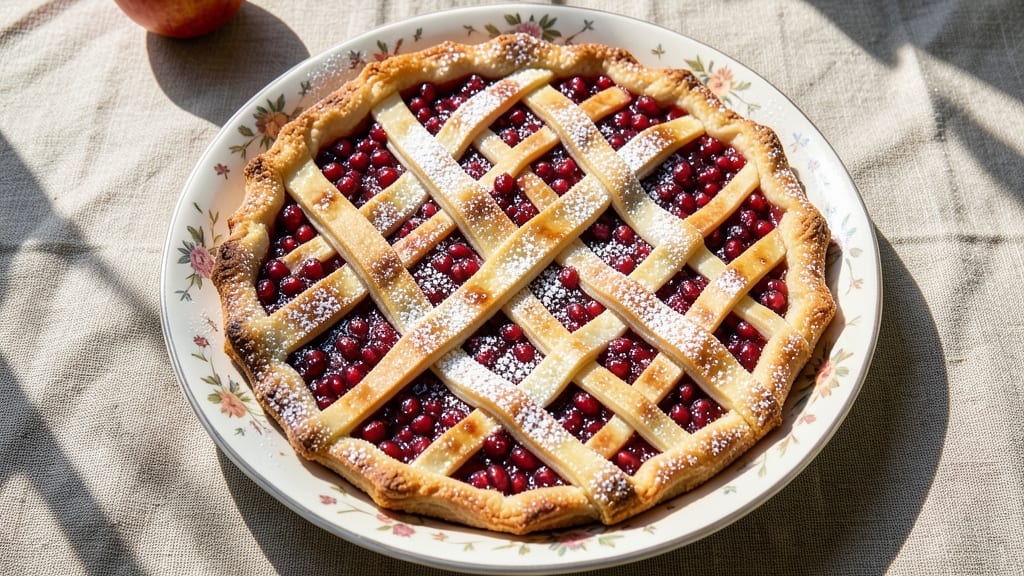
This pomegranate pie recipe transforms ruby-red jewels into a showstopping dessert that balances tart-sweet flavors with a buttery crust. The secret lies in a lattice design that keeps the filling tender while showcasing those vibrant seeds—no one will believe you made it from scratch.
I perfected this recipe after years of testing, ensuring the filling stays thick and the crust remains crisp yet flaky.
The filling combines pomegranate seeds with a simple sugar-spice mixture and cornstarch for stability, creating a texture that’s neither too runny nor overly dense. A classic shortcrust pastry forms the base, while a decorative lattice crust adds elegance without sacrificing structure.
Baking at a precise temperature guarantees a golden crust and a filling that’s just set—never soggy. This pie is a crowd-pleaser that shines at holiday tables or summer gatherings.
What makes this recipe stand out is its versatility: you can adapt the crust to gluten-free or vegan preferences while keeping the filling’s signature tartness. The aroma of warm spices and pomegranate seeds fills the kitchen as it bakes, promising a dessert that’s as beautiful as it is delicious.
Every slice reveals a jewel-like center, making it a feast for both eyes and palate.
Serve it warm with a dollop of whipped cream or a drizzle of caramel for extra indulgence. The lattice design also makes it perfect for gifting—just slice before serving.
Ready to create a pie that’ll impress even the most discerning guests? Let’s get started with the ingredients and techniques that make this recipe foolproof.
Ingredients for pomegranate pie
Transform vibrant pomegranate seeds into a jewel-toned dessert masterpiece with these premium ingredients.
| Ingredient | Amount | Notes |
|---|---|---|
| Pomegranate Seeds 🍇 | 2 ½ cups | Freshly extracted, no sugar added |
| Granulated Sugar 🍚 | 1 ½ cups | White or light brown preferred |
| Cornstarch 🌾 | ½ cup | For thickening consistency |
| Fresh Lemon Juice 🍋 | ¼ cup | From 2-3 lemons, freshly squeezed |
| Ground Cinnamon 🌿 | 1 ½ tsp | Freshly ground preferred |
| Ground Nutmeg 🌿 | ½ tsp | Freshly grated for depth |
| Salt 🧂 | ½ tsp | Diamond Crystal kosher preferred |
| Unsalted Butter 🧈 | 1 cup | Cold, cubed for crust |
| All-Purpose Flour 🌾 | 2 ½ cups | Sifted for light texture |
| Ice Water 💧 | ½ cup | For dough elasticity |
| Large Egg 🥚 | 1 whole | Cold, for binding |
| Granulated Sugar 🍚 | ¼ cup | For lattice crust |
| Heavy Cream 🥛 | ½ cup | Optional for whipped topping |
The pomegranate seeds are the heart of this pie—freshly extracted from a quality fruit (avoid pre-packaged seeds with added sugar). For the crust, unsalted butter from a reputable brand like Plugrá or Land O'Lakes ensures optimal flakiness. All-purpose flour should be sifted to eliminate lumps, and Diamond Crystal kosher salt provides precise seasoning. The lattice design requires extra sugar for stability, while cornstarch guarantees a thick, velvety filling. Freshly grated nutmeg and cinnamon elevate the warm spice profile—Penzeys or McCormick offer premium options. Lemon juice should be freshly squeezed for bright acidity, balancing the tart-sweet filling.
Substitutions can be made thoughtfully: pomegranate molasses (2 tbsp) adds depth if fresh seeds are unavailable, though texture will differ. For gluten-free adaptation, Bob's Red Mill 1:1 baking flour replaces all-purpose flour, though crust texture may vary. Vegan butter (like Miyoko's) works for the crust, but binding may require 1 tbsp aquafaba instead of egg. Brown sugar can replace granulated in the filling, though color will darken. Ground cloves (¼ tsp) may substitute nutmeg for a deeper warmth. Heavy cream can be replaced with coconut cream for a dairy-free whipped topping, though flavor shifts slightly.
Store the pomegranate filling in an airtight container for up to 5 days in the refrigerator, though freshness peaks within 3 days. The crust components (dough and lattice strips) can be refrigerated for 3 days or frozen for 3 months—wrap tightly in plastic wrap. Assembled pie reheats beautifully at 350°F (175°C) for 10-15 minutes, covered with foil. For gifting, slice before serving to preserve the lattice's structural integrity. Pomegranate seeds can be frozen for up to 6 months in a sealed bag, though texture softens slightly upon thawing.
Why You'll Love This Recipe
- No Fuss Filling: I swear by this—just toss pomegranate seeds, sugar, and cornstarch into a saucepan with lemon juice and a pinch of cinnamon. Five minutes of stirring, and you’ve got a filling that tastes like autumn in a jar. No blenders, no straining, no stress.
- Tart-Sweet Magic: That lemon juice and cinnamon combo? It’s the secret weapon. The seeds stay juicy, the sugar caramelizes just enough, and the cinnamon adds warmth without overpowering. It’s the kind of flavor that makes you forget you’re eating dessert for breakfast.
- Weekday Hero: This pie keeps beautifully for days, so I make it on Sundays and slice it for lunches all week. Pack it in a container, and it’s a showstopper at potlucks—or just your own midweek morale boost.
- Budget Bright Spot: Pomegranate seeds might look fancy, but they’re cheaper than you think, especially if you buy the whole fruit and crack it open yourself. A single bag of sugar and cornstarch stretches for multiple pies, and the lemon and cinnamon? Pantry staples that don’t break the bank.
Step-by-step instructions for pomegranate pie
Here's the method for a pie with jewel-like pomegranate seeds and a perfectly flaky crust.
Prepare the Pomegranate Filling
In a large mixing bowl, combine the 2.5 cups pomegranate seeds, 1.5 cups granulated sugar, 0.5 cup cornstarch, 0.25 cup fresh lemon juice, 1.5 teaspoons ground cinnamon, 0.5 teaspoon ground nutmeg, and 0.5 teaspoon salt. Mix thoroughly until the sugar and cornstarch are evenly distributed throughout the seeds.
This filling needs to thicken properly during baking, so the cornstarch is crucial for achieving that perfect gel-like consistency. The lemon juice brightens the natural tartness of the pomegranate, while the spices add warmth that complements the ruby seeds. Let this mixture sit at room temperature for 15 minutes before proceeding—this allows the flavors to meld slightly.
Create the Pie Crust
In a food processor, pulse the 2.5 cups all-purpose flour and 0.5 teaspoon salt until combined. Add the 1 cup unsalted butter, cut into cubes, and process until the mixture resembles coarse crumbs with pea-sized butter pieces remaining. Pour in the 0.5 cup ice water and pulse until the dough just comes together when pressed.
Transfer the dough to a lightly floured surface and divide it into two equal discs. Roll out the first disc to fit a 9-inch pie dish, pressing gently to ensure it adheres to the bottom and sides. Chill the rolled crust in the refrigerator while you prepare the lattice top. The cold dough prevents shrinking during baking and helps maintain a crisp texture.
Assemble and Bake the Pie
Pour the prepared pomegranate filling into the chilled pie crust, spreading it evenly. Cut the second dough disc into ½-inch strips for a lattice pattern. Arrange the strips in a crisscross design over the filling, leaving the center open to allow steam to escape. Sprinkle the 0.25 cup granulated sugar evenly over the lattice for a subtle caramelized sweetness.
Bake the pie in a preheated 375°F oven for 45-50 minutes, or until the crust is golden brown and the filling is bubbling gently at the edges. The filling should set slightly but remain slightly jiggly in the center—this indicates it hasn't overcooked. If the lattice begins to brown too quickly, loosely cover it with aluminum foil to prevent burning.
Finish and Serve
Remove the pie from the oven and let it cool completely on a wire rack for at least 2 hours. This resting period allows the filling to set properly and enhances the flavors. For an optional finishing touch, whip the 0.5 cup heavy cream until soft peaks form and spread it over the cooled pie just before serving.
The pie is best enjoyed at room temperature, where the filling reaches its ideal texture—firm yet tender, with the bright acidity of the lemon juice cutting through the natural sweetness of the pomegranate seeds. Each slice should reveal a stunning display of ruby jewels against the golden crust, making this pie as visually impressive as it is delicious.
Pro Tips For Making Pomegranate Pie
- Simmer Slow and Steady: The pomegranate filling’s texture depends on this—bring it to a gentle boil, then drop to a low simmer. I used to rush it, and the seeds turned mushy. Let it cook for 15-20 minutes, stirring often, until it thickens like a thick syrup. (Yes, it’ll look underdone at first—that’s normal.)
- Toast the Seeds First: Dump those pomegranate seeds into a dry skillet over medium heat for 2-3 minutes. They’ll crisp slightly, deepening their flavor and preventing a watery pie. Skip this, and your filling might taste dull—trust me, your nose will thank you when you smell that toasty aroma.
- Strain the Juice: After simmering the filling, strain out the seeds through a fine-mesh sieve. This keeps the pie clean and prevents a grainy texture. I learned this the hard way when I served a slice with seeds stuck in every bite—no one wants to chew on pomegranate pulp mid-crust.
- Whisk the Cornstarch: Mix the cornstarch with a splash of cold lemon juice or water before adding it to the hot filling. This prevents clumping and ensures a smooth, glossy finish. I was skeptical until I tried it—now it’s non-negotiable for me. (Your future self will notice the difference.)
Perfect pairings for this dish
Whipped Cream Pairing
Top your pomegranate pie with homemade whipped cream—lightly sweetened with 1 tablespoon powdered sugar and a pinch of vanilla extract. Use cold heavy cream (or coconut cream for dairy-free) and whip just until soft peaks form.
This adds a cloud-like contrast to the dense filling and balances the tart-sweet flavors. I like to dust with ½ teaspoon ground cardamom for an exotic twist. 🥛
Caramel Drizzle
Elevate the pie with a salted caramel drizzle—simmer ½ cup granulated sugar with 3 tablespoons heavy cream until golden, then whisk in 1 tablespoon unsalted butter and ¼ teaspoon flaky sea salt.
Let cool slightly before drizzling over slices. The caramel’s richness complements the pomegranate’s tartness, while the salt enhances every bite. For extra flair, sprinkle with toasted pistachios. ✨
Citrus Zest Garnish
Brighten each slice with zest from 1 lemon or orange—toss the zest with 1 teaspoon honey and sprinkle over the pie just before serving. The citrus oils awaken the pomegranate’s natural acidity and add a fragrant aroma.
I also add edible gold leaf for a luxurious touch at holiday gatherings. The zest pairs beautifully with the spiced filling. 🍋
Spiced Tea Pairing
Serve your pie with chai tea or pomegranate iced tea to enhance the dessert’s flavors. For chai, steep 1 black tea bag with 1 cinnamon stick, 2 cloves, and 1 star anise in 2 cups hot water for 5 minutes.
For iced tea, steep 1 cup pomegranate juice with 1 cup black tea and chill. The warm spices mirror the pie’s filling, while the tart tea cleanses the palate. 🍵
Cheese Board Contrast
Create a dessert board with aged cheddar, brie, and goat cheese alongside the pie. The sharpness of the cheddar cuts through the sweetness, while the brie’s creaminess adds richness.
Add fig jam and walnuts for texture. This contrast turns your pie into a centerpiece for a sophisticated dessert spread. 🧀
Seasonal Fruit Accents
In summer, add sliced peaches or berries to the plate—their juiciness contrasts the pie’s density. In winter, try roasted pears with a sprinkle of cinnamon.
The fruit’s natural sugars complement the pomegranate, while their acidity keeps the pie from feeling too heavy. Seasonal fruit keeps the presentation vibrant year-round. 🍑
Nutrition facts
Frequently asked questions
Can I use pomegranate molasses instead of fresh seeds?
Yes, but the texture will differ slightly. Replace 2.5 cups seeds with 1 cup pomegranate molasses plus 1 cup water to mimic the juiciness. The filling will be thicker and more syrupy, so reduce cornstarch to 0.3 cup to prevent over-thickening. Adjust sugar to taste since molasses is naturally sweet.
How do I prevent the lattice crust from burning before the filling sets?
Cover the lattice with a loose sheet of aluminum foil after 25 minutes of baking if it starts browning too quickly. This protects the crust while allowing the filling to cook through. For extra insurance, brush the lattice strips with egg wash before baking—it creates a golden barrier. The filling should be just set (slightly jiggly) when done.
Is this pie gluten-free or vegan-friendly?
With substitutions, absolutely! For gluten-free, replace all-purpose flour with a 1:1 gluten-free baking flour (like Bob's Red Mill). For vegan, swap butter for vegan butter and add 1 tbsp aquafaba to the dough for binding. The filling remains the same—just ensure your cornstarch is certified gluten-free. Taste as you go, as textures may vary slightly.
Can I make the filling ahead of time?
Yes, the filling can be prepared up to 5 days in advance and stored in an airtight container in the fridge. Stir well before using, as the seeds may settle. For best results, let it sit at room temperature for 15 minutes before pouring into the crust to even out consistency. The crust components can also be prepped separately and refrigerated for 3 days.
Why did my pomegranate pie filling turn watery?
Overcooking or insufficient cornstarch are the usual culprits. The filling should be bubbly but slightly jiggly at the center when done. If it’s watery, the oven may have been too hot—try 350°F (175°C) next time. For a quick fix, thicken the filling by simmering it with 1 tbsp cornstarch mixed with 1 tbsp water until it gels. Always ensure your cornstarch is fresh and measure it accurately.