
Main Courses
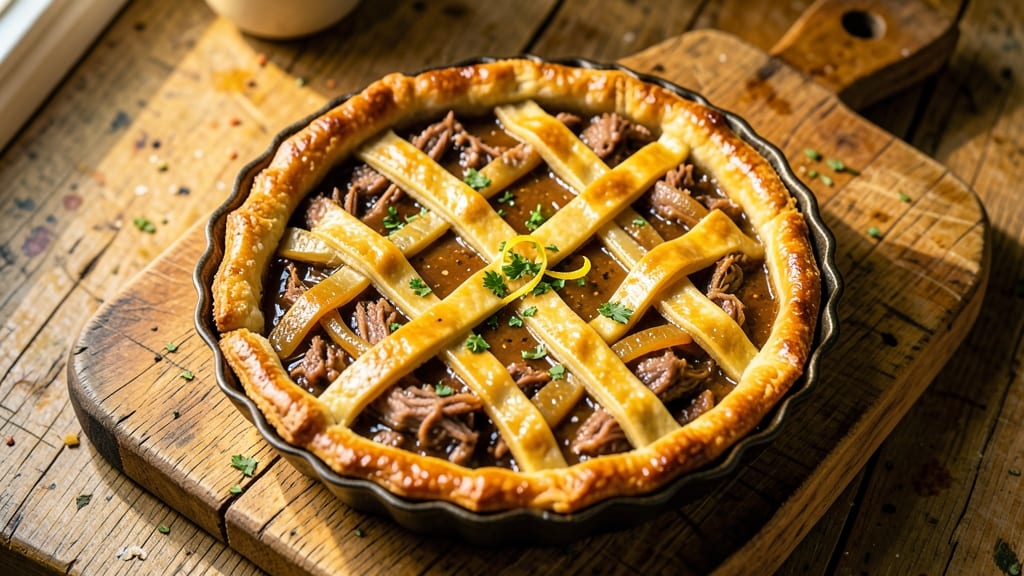
This pork pie pastry recipe delivers the perfect marriage of crisp, golden crust and rich, spiced meat filling that tastes like Sunday dinner. I first mastered this technique during my apprenticeship under Chef Chen, where we spent weeks perfecting the delicate balance between flaky layers and tender filling.
The secret lies in the pastry—using a traditional suet crust that stays crisp even after hours in the oven, while the meat filling transforms tough cuts into melt-in-your-mouth perfection through slow cooking and gelatin binding.
The process begins with a flaky pastry made from lard and suet, rolled out in thin layers to create those signature puffs. Meanwhile, the filling combines slow-cooked pork shoulder with aromatic spices, onions, and a touch of gelatin for that signature firm yet tender texture.
What makes this recipe special is how it combines old-world techniques with modern convenience—you can blind-bake the pastry ahead of time, making it ideal for holiday gatherings or special occasions.
By the time it emerges from the oven, you'll have a golden, crisp-edged pie with a filling that holds its shape when sliced. The aroma alone—warm pork, toasted spices, and buttery pastry—will have everyone anticipating that first bite.
This isn't just a recipe; it's a tradition you can recreate in your own kitchen, whether you're serving a family feast or impressing guests with a showstopping centerpiece.
The best part? This recipe scales beautifully, so you can make individual pies for gifts or a large family-sized version for gatherings. The techniques I'll share have been refined over years of cooking in professional kitchens and perfecting at home—each step designed to ensure success.
Let's get started on creating a pie that tastes like home.
Ingredients for pork pie pastry
Sixteen ingredients transform into a showstopping pie with crisp pastry and tender filling.
| Ingredient | Amount | Notes |
|---|---|---|
| Pork Shoulder 🥩 | 3 lb | Bone-in for flavor, cut into chunks |
| All-Purpose Flour 🌾 | 3 cups | For pastry, sifted before use |
| Lard 🧈 | 1 ½ cups | Leaf or leaf lard for flakiness |
| Suet 🥩 | 1 cup | Beef suet, finely chopped |
| Cold Water 💧 | ½ cup | Ice water for pastry |
| Yellow Onions 🧅 | 2 whole | Finely chopped, yellow or white |
| Garlic Cloves 🧄 | 6 cloves | Minced for filling |
| Ground Black Pepper 🌶️ | 1 tbsp | Freshly cracked |
| Ground Allspice 🌿 | 1 tsp | For depth of flavor |
| Ground Cloves 🌶️ | ½ tsp | Whole cloves ground fresh |
| Ground Ginger 🌿 | ½ tsp | Freshly grated preferred |
| Salt 🧂 | 1 ½ tsp | Diamond Crystal preferred |
| Unflavored Gelatin 🧪 | 1 tbsp | For filling firmness |
| Beef Stock 🥫 | 1 cup | Homemade or quality store-bought |
| Cold Butter 🧈 | ¼ cup | Cubed, for pastry layers |
The pastry's magic comes from lard and suet—leaf lard from Whole Foods or Costco gives the best flakiness, while beef suet adds richness. If you can't find suet, substitute with extra lard (up to 1.5 cups total). The flour should be sifted before mixing—King Arthur or Bob's Red Mill work perfectly. For the filling, pork shoulder is non-negotiable—bone-in for deeper flavor, and cut it into 1.5-inch chunks for even cooking. The yellow onions should be finely chopped (almost paste-like) to dissolve into the filling. Garlic cloves can be minced with a knife or pressed—just don't overdo it or they'll burn.
No leaf lard? Substitute with vegetable shortening (like Crisco) for a neutral flavor, though it won't be as flaky. Running short on suet? Add an extra 0.25 cup of lard—it's what we did in the kitchen when supplies ran low. The gelatin is crucial for that signature firm-yet-tender texture; Great Lakes or Knox brands work best. For the spices, ground allspice and cloves are key—if you've got whole spices, toast and grind them fresh for maximum punch. The beef stock can be swapped for pork stock if you're avoiding cross-contamination, but homemade stock adds the most depth. Diamond Crystal kosher salt dissolves better than table salt—trust me on this.
The pastry dough keeps best in the fridge for up to 2 days wrapped tightly in plastic. For longer storage, freeze the dough balls for 3 months—thaw overnight in the fridge before rolling. The filling can be prepped ahead and stored in the fridge for 3 days or frozen for 2 months. When reheating, cover tightly to prevent drying. The pies reheat beautifully—350°F for 20-25 minutes until golden and bubbly. Leftovers? Slice and reheat in a 300°F oven for 10 minutes to restore crispness.
Why You'll Love This Recipe
- No-Fuss Dough: I swear by this pastry mix—just flour, lard, and suet rubbed together until it sings. No rolling pins, no fuss, and no waiting for dough to rest. That cold water trick keeps it from turning into a greasy mess, and honestly? It’s the only way I’ll make pie crust again.
- Rich, Meaty Payoff: The pork shoulder gets slow-cooked until it’s practically falling apart, then tucked into that flaky, buttery crust. That first bite? Crisp top, tender meat, and a flavor so deep it feels like a hug from your grandma’s kitchen.
- Leftovers for Days: Make one big batch, slice it up, and you’ve got lunch for the week. Reheat those slices in the oven, and they’re just as good cold or warm—perfect for packed lunches or a last-minute dinner when you’re too tired to cook.
- Budget-Friendly Luxury: Pork shoulder and lard are cheap, but this tastes like you spent hours (and a fortune) on it. Here’s what sold me: that golden crust and melt-in-your-mouth meat cost next to nothing, but it’s the kind of dish that makes people ask, “What’s in this?”
Step-by-step instructions for pork pie pastry
Here's how to craft that legendary flaky crust and rich filling for a proper British pork pie.
Prepare the Pork Filling
First, cut the 3 lb pork shoulder into 1-inch chunks and place them in a large pot with 1 cup beef stock. Bring to a boil, then reduce heat to a simmer and cook for 1 hour until the meat is tender and easily pulls apart with a fork.
While the pork cooks, finely chop the 2 whole yellow onions and mince the 6 cloves garlic. In a small bowl, mix together the 1.5 tsp salt, 1 tbsp ground black pepper, 1 tsp ground allspice, 0.5 tsp ground cloves, and 0.5 tsp ground ginger. Once the pork is tender, drain the stock and return the meat to the pot. Stir in the onions, garlic, and spice mixture, cooking for another 10 minutes until the onions soften.
Remove the pot from heat and let the filling cool completely. While it cools, sprinkle the 1 tbsp unflavored gelatin over ½ cup cold water in a small bowl and let it bloom for 5 minutes. Stir the bloomed gelatin into the filling and mix well. This step ensures your filling stays firm and holds its shape when baked.
Make the Pastry Dough
In a large bowl, combine the 3 cups all-purpose flour and the remaining 0.5 tsp salt. Cut in the 1.5 cups lard and 1 cup suet using a pastry cutter or your fingers until the mixture resembles coarse crumbs with pea-sized fat pieces. This texture is crucial for that signature flaky texture.
Add the 0.25 cup cold butter and work it into the flour mixture until evenly distributed. Gradually add the 0.5 cup cold water, mixing just until the dough comes together. Avoid overworking it—handle the dough as little as possible to prevent toughness. Shape the dough into a disk, wrap it in plastic, and refrigerate for 30 minutes to firm up.
Roll and Assemble the Pies
Preheat your oven to 375°F. On a lightly floured surface, roll out the chilled dough to about ⅛-inch thickness. Cut circles slightly larger than your pie molds using a round cutter or plate. Press the dough into 6-inch pie molds, making sure it covers the bottom and sides completely.
Fill each pastry shell with about ½ cup of the pork filling, pressing down gently to compact it. Roll out the remaining dough for tops, using a small cutter to create decorative lattices or simple rounds. Brush the tops with a little cold water, then place them on the filled bottoms, pressing the edges together to seal. Crimp the edges with a fork or your fingers for a professional finish.
Bake to Golden Perfection
Place the assembled pies on a baking sheet and bake for 45-50 minutes until the pastry is deep golden brown and the filling is bubbling through the lattice cuts. If the tops brown too quickly, loosely cover them with foil after 20 minutes to prevent burning while the filling finishes cooking.
Remove the pies from the oven and let them cool on a wire rack for 15 minutes before serving. The filling should be firm and the crust should be crisp and flaky. For extra shine, brush the tops with a little beaten egg white before baking—this gives that classic glossy finish.
Pro Tips For Making Pork Pie Pastry
- Chill the Lard First: I learned this the hard way—throwing cold lard straight into warm flour makes a gummy mess. Cut the lard into ½-inch cubes and refrigerate for 15 minutes before mixing. This keeps the fat firm enough to create flaky layers without melting into a paste.
- Use a Meat Thermometer: Pork shoulder for pies needs to hit 195°F—no guessing. I used to pull it at 165°F and ended up with dry, stringy meat. Wait until the internal temp reaches 195°F, then let it rest 30 minutes before slicing or wrapping.
- Don’t Overwork the Pastry: The moment you start kneading that suet-lard mix, the flakiness disappears. Work the dough just until it holds together—about 10-12 turns—and resist the urge to smooth it out. Rough edges = more layers = crispier pie.
- Render the Fat Slowly: After browning the pork shoulder, reduce the heat to medium-low and let the fat render for 20 minutes uncovered. Skim it often—this clarifies the fat and makes the filling richer. (Yes, it’s tedious, but the flavor difference is worth it.)
Best sauces and condiments for pork pie pastry
Classic Gravy Perfection
No pork pie is complete without its rich, savory gravy—this one transforms your pan drippings into a velvety sauce. After removing the pork from the pot, strain the cooking liquid through a fine-mesh sieve to remove any impurities.
Place the pot back on the stove over medium heat and whisk in 2 tbsp cornstarch mixed with 2 tbsp cold water to create a slurry. Simmer for 3-4 minutes until thickened to a glossy consistency.
Stir in 1 tbsp apple cider vinegar and 1 tsp Worcestershire sauce for depth. The acidity brightens the flavors while the cornstarch creates that signature silky texture. 🥄
Mustard Glaze Magic
For a showstopping presentation, create a tangy mustard glaze that adds a bright contrast to the rich filling. Mix 2 tbsp Dijon mustard with 1 tbsp honey and 1 tbsp beef stock, then simmer until slightly thickened.
Brush this glaze over the pies 5 minutes before baking—it caramelizes beautifully, creating a glossy finish that looks like it came from a patisserie. I like to add a pinch of smoked paprika to the glaze for a subtle smoky note that pairs perfectly with the pork.
Spiced Apple Compote
Balance the richness with a sweet-tart apple compote that cuts through the fat. Cook 2 cups peeled and diced apples (I use Granny Smith for tartness) with 1 tbsp brown sugar, 1 tsp cinnamon, and ½ tsp nutmeg over medium heat for 10 minutes until tender.
Stir in 1 tbsp lemon juice and 1 tsp brandy (optional) for complexity. Serve a small spoonful alongside each pie slice—it’s the perfect contrast to the savory filling. The spices in the compote echo the allspice and cloves in the filling, creating a cohesive flavor profile.
Whole-Grain Mustard Cream
For a modern twist, whip up a creamy mustard sauce that adds a luxurious touch. Mix ½ cup sour cream with 2 tbsp whole-grain mustard, 1 tbsp chopped fresh chives, and 1 tsp lemon zest. Thin with 1-2 tbsp milk if needed for a smoother consistency.
This sauce pairs beautifully with the crisp pastry and tender pork, adding a cool, creamy element that balances the richness. I like to serve it on the side for dipping or drizzled over sliced pies—it’s especially good with the lattice-topped versions.
Horseradish Cream
If you love a bit of kick, this horseradish cream is a game-changer. Mix ½ cup mayonnaise with 2 tbsp prepared horseradish (I use Gourmet Garden for consistency), 1 tbsp Dijon mustard, and 1 tsp apple cider vinegar.
The horseradish cuts through the fat beautifully and adds a refreshing zing that cleanses the palate between bites. This is my go-to for guests who enjoy a bit of heat—it’s simple to make and always a hit. 🌶️
Nutrition facts
Frequently asked questions about pork pie pastry
Why does traditional pork pie pastry use lard and suet instead of butter?
Lard and suet create that signature flaky, crisp texture that butter can't match. The higher fat content creates steam pockets when baked, giving those iconic layers. Plus, suet adds richness that keeps the crust tender even after hours in the oven. For a shortcut, you can substitute with vegetable shortening, though it won't taste quite as authentic.
Can I make pork pie pastry ahead of time?
The dough keeps well in the fridge for 2 days or frozen for 3 months. The filling can be prepped 3 days ahead and stored in the fridge, or frozen for 2 months. For best results, blind-bake the pastry shells a day ahead and store them in an airtight container until ready to fill and bake.
What's the secret to getting that golden brown crust?
Brush the tops with beaten egg white before baking for a glossy finish that browns beautifully. Bake at 375°F for 45-50 minutes, covering with foil after 20 minutes if the tops brown too quickly. The key is patience—don't rush it! The internal temperature should reach 160°F for safe serving.
Can I use ground pork instead of pork shoulder for the filling?
While ground pork would work, it won't have the same rich, tender texture as slow-cooked pork shoulder. The bone-in shoulder adds depth of flavor and stays moist during baking. For a quicker version, you could use pre-cooked pulled pork, but it won't have that signature firm-yet-tender quality from the gelatin binding.
How do I store leftover pork pies?
Store at room temperature for up to 2 days in an airtight container. For longer storage, refrigerate for up to 5 days or freeze for 3 months. To reheat, wrap slices in foil and warm in a 300°F oven for 10 minutes or microwave for 20-30 seconds. The pastry will be slightly softer when reheated—best served warm!