
Main Courses
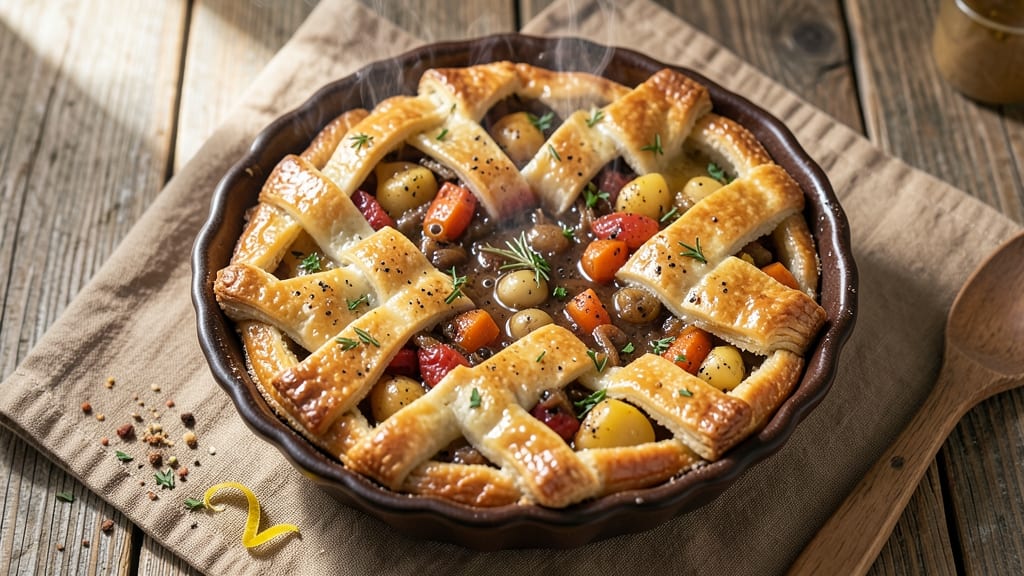
This savory pot pie crust recipe delivers the kind of flaky, golden layers that make every bite worth savoring. After years of perfecting my technique—including the infamous "no-sog" trick—I’ve created a crust that’s sturdy enough to hold hearty fillings yet tender enough to melt in your mouth.
The secret? Cold butter cut into pea-sized pieces and a gentle hand when rolling, ensuring those signature shatteringly crisp edges without cracking.
What sets this crust apart is its versatility—whether you’re making a classic chicken and vegetable pot pie or a modern twist with wild mushrooms and goat cheese.
The dough comes together in just 15 minutes of prep, then rests while you prepare your filling, making it the perfect foundation for a comforting meal.
The key is patience: letting the dough chill before rolling prevents shrinking, while a hot water bath in the oven creates that signature dome shape and golden-brown finish.
By the time it emerges from the oven, your crust will be crisp yet tender, with a caramelized edge that adds depth to every spoonful of filling. The flakiness comes from the butter layers, while a pinch of salt and a splash of vinegar in the dough ensure stability.
This isn’t just a crust—it’s the star of your pot pie, turning a simple dish into something restaurant-worthy.
Pair it with your favorite filling—whether it’s creamy chicken, hearty beef, or a vegetarian medley—and bake until the edges are golden and the filling bubbles. The best part? Leftovers reheat beautifully, making this the ultimate make-ahead comfort food. Let’s get baking!
Ingredients for savory pot pie crust
Seven ingredients transform into the perfect flaky, golden pot pie crust foundation.
| Ingredient | Amount | Notes |
|---|---|---|
| All-Purpose Flour 🌾 | 3 cups | Sifted for light texture |
| Unsalted Butter 🧈 | 1 cup | Cold, cut into pea-sized pieces |
| Ice Water 💧 | ½ cup | Chilled for stability |
| Apple Cider Vinegar 🍎 | 1 tbsp | For elasticity and stability |
| Diamond Crystal Kosher Salt 🧂 | ½ tsp | Fine grain preferred |
| Granulated Sugar 🍚 | 1 tbsp | Balances flavors subtly |
| Large Egg 🥚 | 1 whole | Room temperature for blending |
The butter is non-negotiable here—European-style unsalted butter like Plugrá or Miyoko's delivers the best flavor and flakiness. Grab it from the refrigerated section at Whole Foods or your local gourmet market. Keep it cold until you're ready to cut it into pea-sized pieces—that's the secret to those signature flaky layers. The flour should be all-purpose, not self-rising, and sifted before measuring to avoid dense dough. I always double-check my Diamond Crystal kosher salt—it dissolves more easily than table salt, which matters here.
No butter? Shortening like Crisco works in a pinch, though you'll lose some flavor. Running short on vinegar? Lemon juice at the same amount does the trick. The egg acts as a binder, but if you're avoiding it, 1 tbsp of cold water plus 1 tsp cornstarch mimics its function. For extra flakiness, some bakers add 1 tbsp of cold milk to the dough—worth experimenting with if you love that buttery richness. And remember: the dough should be cold and slightly crumbly when you roll it out—that's the magic.
Wrap the dough tightly in plastic and refrigerate for at least 1 hour before rolling—this prevents shrinking and ensures those perfect layers. The dough keeps well in the fridge for up to 48 hours or can be frozen for 3 months wrapped in parchment and plastic. When ready to use, let it sit at room temperature for 10-15 minutes before rolling. Pro tip: use a rolling pin with a handle to keep your hands warm while working—cold dough sticks!
Why You'll Love This Recipe
- No-Fuss Dough: I swear by this crust—just flour, butter, ice water, and a splash of vinegar. No rolling pins, no stress, no waiting for dough to relax. You can mix it in a bowl, pat it out, and it still turns golden and crispy.
- Tangy Crisp Magic: That apple cider vinegar? It’s the secret. The crust gets this perfect balance—flaky layers with a subtle tang that cuts through rich fillings. Honestly, it’s the kind of detail that makes a homey meal feel like a restaurant dish.
- Weeknight Hero: Between us, this crust is my go-to for quick meals. Use it for pot pies, hand pies, or even a savory tart—it’s forgiving, fast, and always delivers. Even if I’m exhausted after work, I can throw this together in 15 minutes.
- Budget-Friendly Staples: Flour, butter, salt—these are pantry basics that don’t break the bank. A single batch makes enough for two meals, and leftovers reheat beautifully. (Yes, even on a Tuesday night.)
Step-by-step instructions for savory pot pie crust
Here's how to create the perfect flaky, golden-brown crust that will make your pot pie shine.
Cut Cold Butter into Flour Mixture
In a large mixing bowl, combine the 3 cups all-purpose flour, ½ teaspoon Diamond Crystal kosher salt, and 1 tablespoon granulated sugar. Whisk briefly to distribute the salt and sugar evenly throughout the flour. This ensures balanced flavor in every bite of your crust.
Add the 1 cup unsalted butter, cut into pea-sized pieces, to the flour mixture. Using a pastry cutter or your fingers, work the butter into the flour until you achieve a coarse crumb texture with pea-sized butter pieces still visible. This is crucial—overworking the butter develops gluten, which ruins the flaky texture. If your butter melts, chill the mixture for 10 minutes before proceeding.
Add Wet Ingredients for Elasticity
Create a well in the center of your flour mixture and add the 1 whole large egg, 1 tablespoon apple cider vinegar, and ½ cup ice water. The vinegar and egg work together to create elasticity in the dough, preventing cracks during baking. Using your hands or a fork, gently mix the wet ingredients into the flour until just combined.
Be careful not to overmix—stop as soon as the dough comes together. The dough should be shaggy and slightly crumbly. If it feels too dry, add 1 teaspoon more ice water; if too sticky, add 1 tablespoon more flour. The goal is a dough that holds together when pressed but doesn't stick to your hands.
Chill the Dough for Maximum Flakiness
Divide the dough into two equal portions and flatten each into a ½-inch thick disk. Wrap each disk tightly in plastic wrap and refrigerate for at least 1 hour or up to 24 hours. This resting period is essential—it allows the gluten to relax and the butter to firm up, which creates those beautiful, separate layers of flaky goodness when baked.
Real talk: Skipping this step is a common mistake. The dough might seem ready to roll out, but without proper chilling, your crust will shrink during baking and lose that prized flakiness. If you're in a hurry, pop the dough in the freezer for 20 minutes—it works in a pinch.
Roll Out and Assemble the Crust
On a lightly floured surface, roll out one disk of chilled dough into a 12-inch circle, about ⅛-inch thick. I like to rotate the dough a quarter turn after every few rolls to maintain even thickness. The goal is a smooth, even circle that will fit perfectly over your pot pie filling.
Transfer the rolled-out dough to your pie dish, gently pressing it into the edges to create a snug fit. Trim any excess dough hanging over the edge with a sharp knife. For extra security, fold the edge of the dough under itself to create a double-thick crust edge—this prevents shrinking during baking. Repeat with the second disk for the top crust.
Bake to Golden Perfection
Preheat your oven to 375°F. Place your assembled pot pie on a baking sheet lined with parchment paper (this prevents the bottom crust from getting soggy). Cut a few small slits in the top crust to allow steam to escape—this prevents a soggy top and ensures a crisp finish.
Bake the bottom crust for 15 minutes before adding your filling. This pre-baking step, called blind baking, prevents a soggy bottom. After adding your filling and top crust, brush the top with a beaten egg mixed with 1 tablespoon water for a beautiful golden finish. Bake for an additional 30-40 minutes until the crust is deep golden brown and the filling is bubbling.
Pro Tips For Making Savory Pot Pie Crust
- CHILL THE BUTTER FIRST: Cut that unsalted butter into cubes and pop it in the fridge for 10-15 minutes before mixing—cold butter creates flaky layers, not greasy dough. I used to skip this and ended up with a dense, tough crust that tasted more like a biscuit than a pie.
- WEIGH YOUR FLOUR: Scoop that all-purpose flour directly from the bag into a scale—don’t spoon it out, don’t tap the bag, just scoop and measure. Flour settles differently in bags, and a few extra tablespoons can turn your crust from tender to chewy. I learned this after making three batches that all turned out too heavy.
- WORK FAST WITH ICE WATER: Use water straight from the freezer—no thawing needed—and keep it in a spray bottle or small pitcher. This keeps the dough from getting too warm as you mix, and you can add it gradually instead of drowning the flour. My grandmother swore by this, and she was right: the crust stays light and crisp, not gummy.
- REST THE DOUGH: Let the rolled-out crust sit on the counter for 5 minutes before cutting or transferring—this relaxes the gluten and prevents shrinking. I know, I know, but trust the process: a 5-minute pause makes all the difference between a crust that holds its shape and one that slides into the filling like a sad puddle.
Wine and beer pairings for this recipe
White Wine Classics
A crisp Sauvignon Blanc from New Zealand or Loire Valley is my go-to pairing—its bright citrus and herbal notes cut through the richness of the crust while complementing the savory filling.
Look for a 2023 Cloudy Bay or Oyster Bay for that signature zesty punch. The acidity balances the buttery crust beautifully, making every bite feel fresh. 🍷
For a richer filling like beef or mushroom, try a Chardonnay with subtle oak—something like Kendall-Jackson Vintner's Reserve adds a creamy texture that mirrors the crust's flakiness. The slight vanilla notes enhance the caramelized edges without overpowering the dish.
Red Wine Elegance
If your pot pie leans toward hearty meats, a Pinot Noir from Oregon or Burgundy brings sophistication. The 2022 Domaine Serene has red fruit notes that harmonize with the crust's golden caramelization. Avoid heavy reds like Cabernet—they can clash with the delicate butter layers.
For a bolder filling, a Syrah from the Rhône Valley adds spice and dark fruit that stand up to the crust's richness. Try Guigal Côte-Rôtie—its peppery finish cleanses your palate between bites of flaky crust and savory filling.
Beer Pairings
A Belgian Witbier like Hoegaarden or Stella Artois is perfect—its coriander and citrus notes refresh the palate after each rich bite. The effervescence also helps cut through the buttery crust.
For a malty option, try a German Helles Lager like Weihenstephaner—its light body and subtle sweetness complement the crust's caramelized edges.
Craft beer lovers should reach for a sour ale like Allagash White—the tartness balances the richness of the crust and filling. If you prefer hoppy beers, a light American IPA (like New Belgium Voodoo Ranger) adds a citrusy contrast that enhances the crust's flakiness.
Cocktail Complements
For a festive touch, serve a gin-based cocktail like a Savory Pot Pie Spritz—mix 2 oz gin, ½ oz apple cider vinegar, and ½ oz honey syrup, then top with soda water.
The vinegar echoes the crust's tang, while the honey rounds out the savory notes. Garnish with a lemon twist for brightness. 🍸
Or try a whiskey sour with a twist: swap the usual citrus for 1 oz apple brandy and ½ oz lemon juice—the apple notes bridge the crust's buttery richness and the filling's savory depth. Serve over crushed ice for a refreshing contrast to the warm pie.
Nutrition facts
Frequently asked questions
Can I make this crust ahead of time?
This dough keeps beautifully in the fridge for up to 48 hours wrapped tightly in plastic. For longer storage, freeze it for 3 months by wrapping the disks in parchment and plastic. Thaw overnight in the fridge before using—never at room temperature to prevent butter from melting. The chilled dough rolls out more easily after thawing.
Why does my crust turn out dense instead of flaky?
Overworking the butter or skipping the chill time are the top culprits. Keep butter cold and cut into pea-sized pieces—never let it melt. Also, never roll out the dough too thin (aim for ⅛-inch thickness) and always chill for at least 1 hour before baking. If your dough feels sticky, add just 1 tablespoon more flour at a time.
Can I use this crust for savory hand pies too?
Yes! This versatile dough works perfectly for hand pies. Roll it to ⅛-inch thickness, cut circles with a 4-inch round cutter, and fill with your favorite savory mixture. Fold the edges with a fork to seal, then brush with egg wash and bake at 375°F for 20-25 minutes until golden. The vinegar in the dough makes it extra sturdy for handling.
What's the best way to prevent a soggy bottom crust?
Pre-bake the bottom crust for 15 minutes before adding filling (called blind baking). Use pie weights or dried beans to weigh it down, then remove them before adding filling. For extra insurance, spread a thin layer of apricot jam on the pre-baked crust—it creates a moisture barrier while adding subtle sweetness that pairs beautifully with savory fillings.
Can I make this crust without butter?
For a lighter version, replace butter with 1 cup shortening or ½ cup butter plus ½ cup lard. The texture will be slightly less flaky but still sturdy. For a dairy-free option, use 1 cup coconut oil (solid) or vegetable shortening, though the flavor won't be as rich. Chill the dough longer (up to 2 hours) to compensate for the lack of butter's natural firmness.