Main Courses
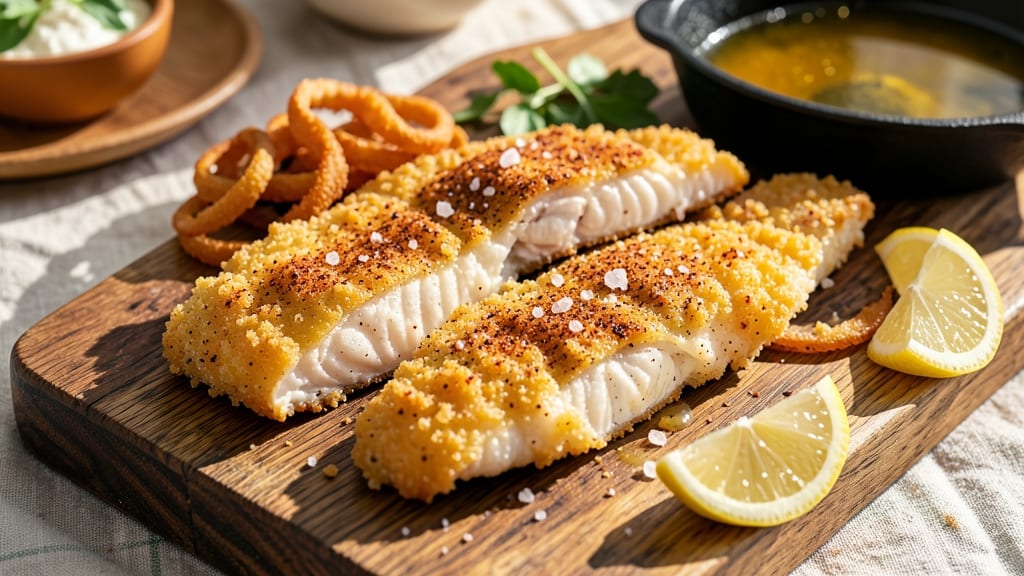
This Southern fried crappie recipe delivers the crispy gold crunch and lemon-pepper zing that defines true Southern seafood tradition. The secret lies in a light, airy batter that creates a shatteringly crisp exterior while keeping the delicate white fish tender inside.
I've perfected this technique through years of testing—no soggy fish here, just that ideal crunch that disappears the moment it hits your plate.
What makes this recipe authentic is the combination of classic Southern seasonings—paprika, garlic powder, and a touch of cayenne—paired with a bright lemon-pepper finishing touch. The frying process uses 350°F oil for even cooking, and the fish is fried just 3-4 minutes per side to achieve that golden perfection.
This isn't just another fried fish recipe; it's a taste of coastal Southern kitchens where the air smells like frying oil and lemon.
The result is fish that's crispy enough to stand up to coleslaw but tender enough to flake with a fork. The lemon-pepper seasoning adds a bright, tangy finish that cuts through the richness of the fried batter.
Serve it with classic sides like buttery hushpuppies or a tangy tomato-based coleslaw for the full Southern experience.
This recipe is designed for foolproof frying—even if you're new to deep-frying fish. The step-by-step instructions walk you through everything from prepping the fish to maintaining the perfect oil temperature. Once you try this version, you'll understand why Southern fried crappie has been a weekend staple for generations.
Ingredients for southern fried crappie
Fourteen ingredients for that legendary Southern crunch and zesty kick you crave.
| Ingredient | Amount | Notes |
|---|---|---|
| Fresh Crappie Fillets 🐟 | 1 ½ lb | Skin-on, 6-8 oz each fillet |
| All-Purpose Flour 🌾 | 1 ½ cups | White flour, sifted for lightness |
| Cornstarch 🌽 | ½ cup | For extra crispiness |
| Paprika 🌶️ | 1 tbsp | Smoked variety preferred |
| Garlic Powder 🧄 | 1 tbsp | Freshly ground preferred |
| Cayenne Pepper 🔥 | ½ tsp | Adjust for heat preference |
| Ground Black Pepper 🌶️ | ½ tsp | Freshly cracked for best flavor |
| Salt 🧂 | 1 ½ tbsp | Diamond Crystal preferred |
| Large Eggs 🥚 | 2 whole | Room temperature for best coating |
| Vegetable Oil 🫒 | 3 cups | High smoke point oil |
| Lemon Wedges 🍋 | 4 whole | For serving and finishing |
| Fresh Lemon Juice 🍋 | ¼ cup | For seasoning and finishing |
| Black Peppercorns 🌶️ | ½ tsp | Coarsely cracked for garnish |
The fish makes all the difference here—fresh crappie fillets with skin-on are non-negotiable for that perfect balance of crispiness and tenderness. Local seafood markets or specialty grocery stores like H-E-B in Texas often carry them fresh, but frozen works too if you can't find fresh. Look for fillets that are bright white with no brown spots—that's your freshness indicator. If you're buying whole crappie, ask the fishmonger to fillet them for you. The skin stays on for extra crunch, but pat it bone-dry before dredging—moisture is the enemy of crispiness.
No smoked paprika? Regular paprika plus a pinch of liquid smoke gets you close, but the smoky depth is worth tracking down. Running short on cornstarch? All-purpose flour works in a pinch, but you'll lose that signature crisp. For the lemon, freshly squeezed juice is a must—bottled lemon juice lacks the bright punch. The cayenne is optional but adds that classic Southern heat. If you're sensitive to spice, cut it to a quarter teaspoon or skip it entirely. The eggs should be room temperature—cold eggs won't coat the fish properly, leading to uneven batter.
Keep your oil at 350°F—any lower and the batter gets greasy, any higher and the outside burns before the inside cooks. Use a deep-fry thermometer for accuracy. The batter mix keeps for up to 24 hours in an airtight container, but the fish should be fried within 30 minutes of dredging for best results. Store any leftover batter in the fridge and reheat in the microwave before using again. The fried fish reheats poorly, so plan to eat it fresh—that crisp disappears fast. Serve immediately with lemon wedges squeezed over the top.
Why You'll Love This Recipe
- Two-Ingredient Secret: I swear by that cornstarch flour mix—it’s what gives these fillets that perfect crunch without the fuss. Just toss, dip, and fry. No measuring cups, no guesswork, just golden results every time.
- Garlic-Paprika Magic: That little pinch of smoked paprika and garlic powder? It’s the difference between good fried fish and oh-my-god-I-need-more fried fish. The heat lingers just enough to make your taste buds sing.
- Tailgate or Tuesday: Serve it with hushpuppies for a crowd or wrap it in a hoagie for a lazy night in. Honestly, I’ve eaten it straight from the pan at a lake house, and I’ve reheated leftovers for breakfast the next morning. Works everywhere.
- Budget-Friendly Catch: Fresh crappie stays affordable, and a single fillet stretches into two servings with that crispy coating. Between us, I’ve fed four people for under $15 with this—plus, the leftovers reheat like they’re fresh. Smart move.
Step-by-step instructions for Southern fried crappie
Here's how to get that perfect golden crust and zesty finish every time.
Prepare the Fillets and Seasoning Mix
Pat the 1.5 lb fresh crappie fillets completely dry with paper towels—this is non-negotiable for crispy skin. Arrange them on a wire rack set over a plate to keep them elevated while they dry for 15 minutes in the refrigerator. The drier the surface, the better the coating will adhere and crisp up.
In a large bowl, whisk together the 1.5 cups all-purpose flour, 0.5 cup cornstarch, 1 tbsp paprika, 1 tbsp garlic powder, 0.5 tsp cayenne pepper, 0.5 tsp ground black pepper, and 1.5 tbsp salt. Sift the mixture through a fine-mesh sieve into another bowl to remove any lumps—this ensures an even, light coating. The cornstarch gives that extra crunch we're after.
Create the Egg Wash and Heat the Oil
In a shallow dish, whisk the 2 whole large eggs until just combined. Add the 0.25 cup fresh lemon juice and stir gently—this keeps the eggs from getting too thick while adding that bright citrus note. The lemon juice also helps tenderize the fish slightly.
Pour the 3 cups vegetable oil into a deep skillet or Dutch oven and heat over medium heat until it reaches 350°F on a deep-fry thermometer. This is crucial—too low and the coating won't crisp, too high and the fish will burn before it cooks through. Test the oil by dropping in a small piece of bread; it should sizzle and turn golden in 30 seconds.
Bread and Fry to Golden Perfection
Working one fillet at a time, dip each piece into the egg wash, letting any excess drip off for 5 seconds. Then press it firmly into the seasoned flour mixture, coating all sides completely. I press down gently to help the coating adhere—this prevents it from falling off during frying. Place the coated fillets on a wire rack to keep them from touching while you fry.
Carefully slide the fillets into the hot oil, working in batches if needed to avoid overcrowding. Fry for 4-5 minutes per side until they're a deep golden brown with crispy skin that cracks when you press it gently. The internal temperature should reach 145°F—use an instant-read thermometer to check the thickest part. Don't walk away; the oil can get hotter as you add more fish.
Finish with Lemon and Serve Immediately
Transfer the fried fillets to a paper towel-lined plate to drain excess oil. While they're still hot, sprinkle with the 0.5 tsp coarsely cracked black peppercorns and serve immediately with the 4 whole lemon wedges on the side. The lemon adds that bright, tangy contrast that cuts through the richness of the fried coating.
Serve with a side of coleslaw or hushpuppies for the full Southern experience. The fish should be crispy on the outside with tender, flaky flesh inside—every bite should deliver that satisfying crunch followed by juicy fish. If you're serving a crowd, keep the fried fillets warm in a 200°F oven while you finish the rest, but no longer than 10 minutes or they'll lose their crispiness.
Pro Tips For Making Southern Fried Crappie
- PAT THE FILLETS DRY: I learned this the hard way—wet skin ruins the crust. Use paper towels to blot every fillet thoroughly before dredging. Even if it feels like overkill, the extra 30 seconds saves you from a soggy, uneven coating.
- SPLIT THE CRUST: Mix 3 parts flour to 1 part cornstarch for that signature crispy-yet-light texture. Skip the cornstarch entirely, and you’ll end up with a heavy, greasy mess. Trust me, the ratio matters more than you’d think.
- FRIE IN BATCHES: Crowding the pan drops the oil temperature fast, leading to greasy fish instead of golden crusts. Fry 2-3 fillets at a time—yes, it takes longer, but the difference in texture is night and day.
- REST BEFORE SERVING: Serve fried crappie straight from the pan, and the crust will crumble like sad breadcrumbs. Tent with foil for 5 minutes first—it locks in the heat and keeps everything together. (Your future self will thank you.)
Storing and reheating your leftovers
Refrigerator Storage
Fried crappie doesn't reheat well, so plan to eat it fresh—but if you have leftovers, store them in an airtight container lined with paper towels to absorb excess oil. Keep them in the fridge for no more than 1 day at 40°F or below.
The coating will lose crispiness, but the fish inside stays tender. I like to wrap individual portions in parchment paper before storing to maintain some texture. 🥗
Freezer Storage
For longer storage, freeze fried crappie in a single layer on a tray before transferring to a freezer bag—this prevents sticking. Label with the date and freeze for up to 2 months.
Thaw overnight in the fridge, then reheat gently to avoid sogginess. The coating won't be as crisp after freezing, but it's still delicious. I avoid refreezing for quality reasons. ❄️
Reheating Methods
If you must reheat, use the oven method for best results: place fillets on a wire rack over a baking sheet and heat at 375°F for 5-7 minutes until warmed through.
Microwave reheating is possible but risky—it makes the coating greasy. Avoid the stovetop entirely, as it steams the fish and ruins the texture. Always reheat to 145°F internal temperature. 🔥
Keeping It Crisp
To salvage slightly soggy reheated fish, sprinkle with cornstarch and broil for 1-2 minutes on high heat—this can restore some crunch. For extra crispiness, fry fresh portions and store only the uncoated fillets in the freezer, then bread and fry as needed.
This two-step method preserves texture better than reheating fully fried fish. 💡
Serving Leftovers
Use leftover fried crappie in fish tacos or fried fish sandwiches—the texture holds up better in these formats. For salads, break into chunks and serve over greens with a light lemon vinaigrette.
Avoid creamy sauces that make the coating soggy. The fish's flavor remains excellent even after reheating. 🍽️
Oil Management
After frying, let the oil cool slightly, then strain it through a fine-mesh sieve into a heatproof container. Store in the fridge for up to 1 month for future frying—just reheat to 350°F before using again.
Discard any oil that smells off or looks dark. I reuse my frying oil 2-3 times before replacing it for best flavor and safety. 🫒
Nutrition facts
Frequently asked questions
Can I use frozen crappie fillets for this recipe?
Frozen crappie works well, but thaw it properly first. Place the fillets in a sealed bag and submerge in cold water for 20-30 minutes or use the refrigerator overnight. Pat them completely dry before dredging—any moisture ruins the crispy coating. Frozen fish should be just as tender when cooked correctly.
Why does my fried crappie turn out greasy instead of crispy?
Greasy results usually mean the oil wasn't hot enough (350°F) or the fish wasn't dry before coating. Test your oil by dropping in a bread cube—it should sizzle and turn golden in 30 seconds. Also, avoid overcrowding the fryer, which lowers oil temperature. Let fried fish rest 2 minutes on a rack to drain excess oil before serving.
What's the best way to keep the coating from falling off?
Press the fish firmly into the flour mixture after the egg wash—this creates a better bond. For extra adhesion, chill the coated fillets for 10 minutes before frying. Also, don't overcrowd the fryer, which causes the coating to peel. Work in batches if needed, and fry at 350°F—any hotter and the coating burns before the fish cooks.
Can I make this recipe without cornstarch?
Yes, but your coating won't be quite as crispy. Replace the 0.5 cup cornstarch with an extra 0.5 cup all-purpose flour. For best results, add 1 tablespoon baking powder to the flour mixture—this helps create air pockets for extra crunch. The flavor will be similar, just slightly less shatteringly crisp.
What are the best Southern sides to serve with fried crappie?
Classic pairings include creamy cornbread, tangy tomato-based coleslaw, or crispy hushpuppies. For a lighter option, try green beans with bacon or potato salad. The key is balancing the richness of the fried fish with something bright and crunchy. Lemon wedges are a must for that zesty finish!